Posts Tagged ‘Darulaman’

Kabul railway coach photo

Sunday, March 7th, 2010

Abandoned railway coach in Kabul

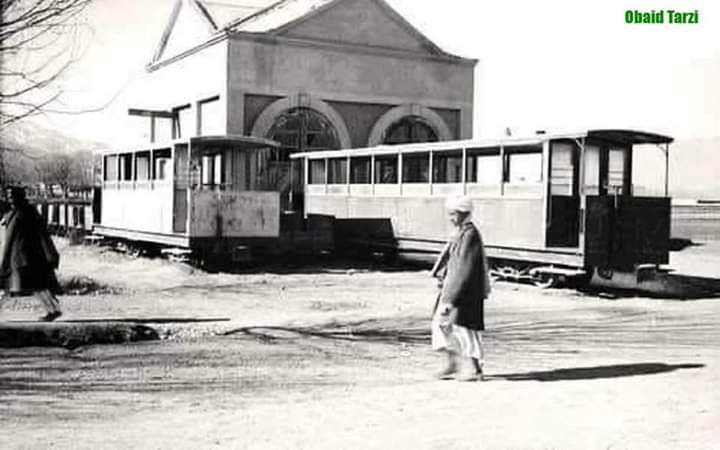
Google’s archive of photos from Life has this one (above) captioned “Deserted Afghan railway car after failure to begin rail system”.

Dated 1938 in the caption, the picture shows an overgrown bogie coach from the short-lived narrow gauge railway which ran for 7 km between Kabul and Darulaman.

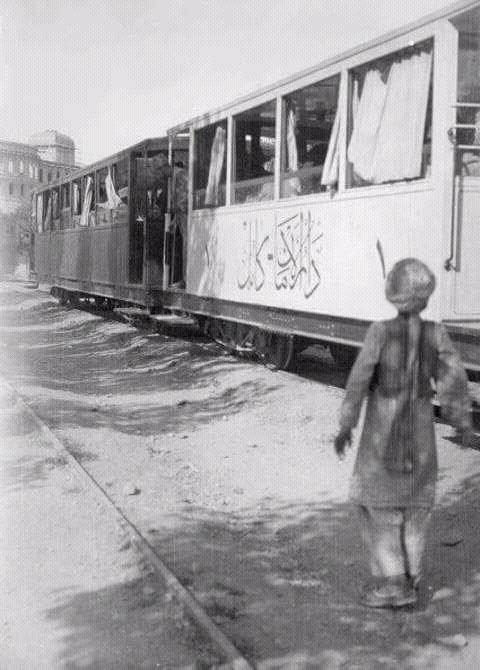
The number painted at each end is “2″ - a vehicle number, or a class number? The coach is noticeably longer than one in labeled “1″ in this picture below, which was taken by Wilhelm Rieck in 1923 and is said to show the first train, so perhaps it is a class number, with the bigger coach being second class.

The Life photo shows another coach at the back, apparently a lighter colour, which is presumably the first class car. But is there a third vehicle as well, in front of that one?

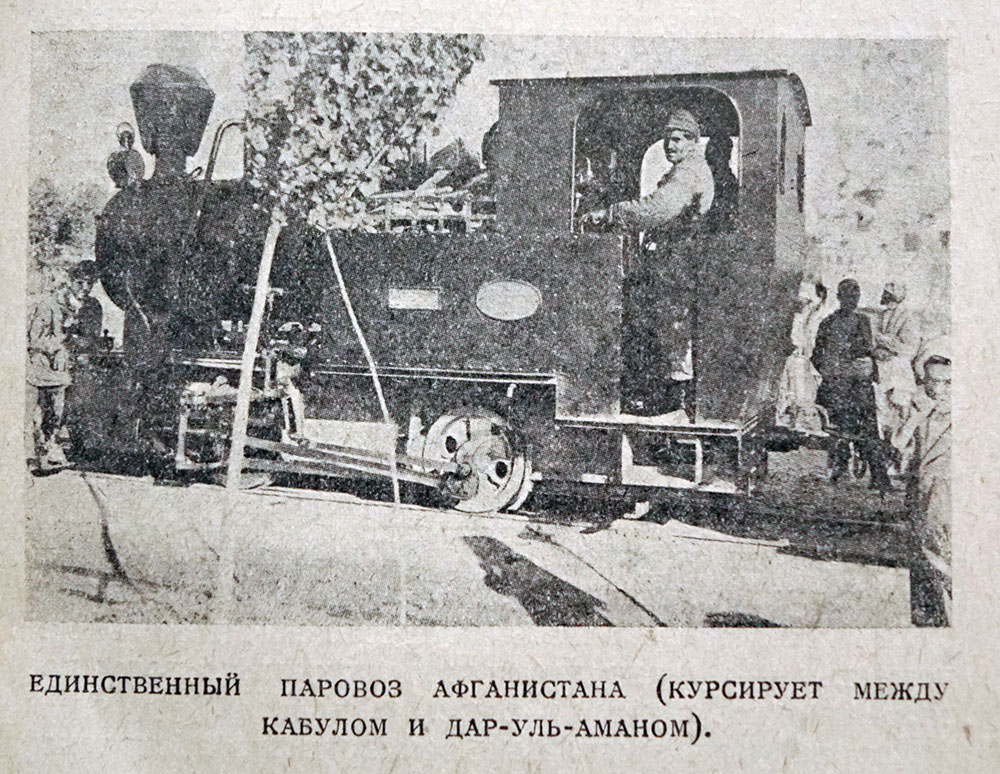
This picture below appeared in the February 1930 issue of the German magazine UHU, and shows two coaches plus some wagons.

Train at Darulaman

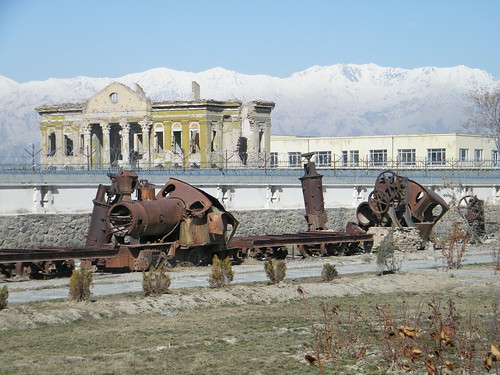
Amazingly, the locomotives have survived, though only the underframes of the coaches remain.

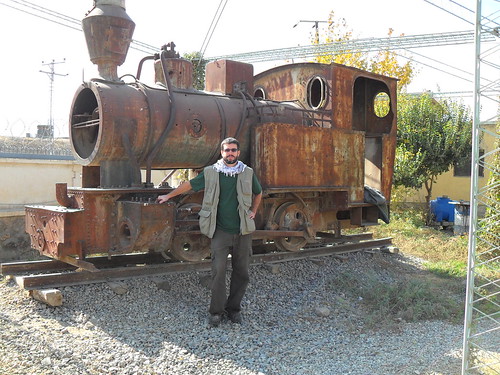
An old locomotive at the Kabul Museum

Sunday, December 13th, 2009

Found on Flickr.

Photo of the Day: 4 August 2009

Photo of the Day: 4 August 2009

An old locomotive at the Kabul Museum.

One of the first three locomotives in Afghanistan, imported by King Amanullah Khan in the 1920s, is now on display at the Kabul Museum.

A US$ 120 million grant from the Asian Development Bank is due to be used for railway development in Afghanistan.

A feasibility study will be conducted for a rail route connecting the northern town of Hairatan, which borders Uzbekistan, to the western province of Herat. Another route under study will be between Shirkhan Bandar in Kunduz province, which borders Tajikistan, and Mazar-i-Sharif in the north of the country.

Afghanistan is a landlocked country with no railways.

Photo: Fardin Waezi (UNAMA).

Photo of displayed Kabul loco

Sunday, May 17th, 2009

“Not something you would expect!” says wandering photographer Bob McIntosh, who took a nice photograph of the plinthed Henschel steam locomotive in Darulaman, near Kabul.

He also has a picture of a grain silo, which shows part of the defunct trolley bus route in Kabul.

A correpsondent called Ramon writes that The engine put on display must be engine no. 19680 or 19681. These two were reported to be kept in the shed for a long time. The 3rd engine has no. 19691, it is the last one in the row outside the museum.

Der Spiegel on King Amanullah’s visit to Berlin

Sunday, March 8th, 2009

Potentaten als Bittsteller (PDF) is a 2001 article about Afghanistan in Der Spiegel.

There is a 1989 photo of the steam engines at Darulaman. The text says:

Amanullah holte deutsche Firmen und Ingenieure ins Land. Sie errichteten Straßen, Brücken, Staudämme und eine königliche Residenz sowie Prachtbauten in Darulaman, einem Vorort von Kabul. Dort sollte auch eine deutsche Eisenbahn fahren, als Lieblingsspielzeug des Potentaten. Die mit dem Schiff nach Bombay transportierten Lokomotiven wurden von Elefanten über enge Passstraßen durch den Hindukusch geschleppt, ein paar hundert Meter Schienenwege verlegt. Noch nach über 20 Jahren Bürgerkriegswirren und der Zerstörung Kabuls standen dort auf einem von Disteln und Dornenbüschen überwucherten Anger drei verrostete Dampfloks und das Fahrgestell eines Reisewaggons „Made in Germany“.

Whch is something vaguely approximating to:

Amanullah sought German companies and engineers into the country. They built roads, bridges, dams
and royal palace in Darulaman, a suburb of Kabul. There should also be a German rail travel, a favourite toy of potentates. The locomtives were transported by ship to Mumbai and then pulled by elephant in passes through the Hindu Kush, where a couple of hundred metres of rail were laid [not sure I've got that translation quite right!]. Yet after more than 20 years of civil war turmoil and the destruction of Kabul, there overgrown by thistles and thorn bushes are three rusty steam engines and the carriage labelled “Made in Germany”.

There is a description (in German) of King Amanullah’s visit to Berlin in 1928.

Die politischen Konsultationen verliefen wenig ergiebig. Der Potentat trat als Bittsteller auf. Er brauche Geld, eröffnete der junge König sogleich dem greisen Reichspräsidenten, „Geld zur Entwicklung meines Landes“. Auch wolle er Eisenbahnen bauen. Bei den Eisenbahnen mahnte Hindenburg zur Vorsicht („wenig rentable Unternehmen“), und über besondere Geldmittel verfüge er leider nicht. Aber Deutschland sei gern bereit, Afghanistan „tüchtige Leute“ zur Verfügung zu stellen.

The political consultations were low yielding. The potentate appeared as a supplicant. He needed money, the young king immediately told the aged President [Hindenberg], ‘money to develop my country.” He even wanted to build railways. Hindenburg warned to be cautious about railways (”little profitable business”), and did not have funds. But Germany was happy to provide “capable people”.

(better translations gratefully accepted!)

Photos of the Kabul steam locos and coaches in 1971

Sunday, January 25th, 2009

Two Henschel steam locomotives from the former Kabul - Darulaman railway in 1971 (Photo: Burkhard Puetz)

Burkhard Puetz was in Afghanistan in 1971. He took these photographs showing two of the 2′ 6″ gauge Henschel steam locomotives from the Kabul to Darulaman railway still in their shed, and also the remains of the carriages outside.

Remains of railway coach at Darulaman in 1971 (Photo: Burkhard Puetz)

Remains of railway coach at Darulaman, near Kabul, 1971 (Photo: Burkhard Puetz)

Child in the cab of one of the Kabul - Darulaman railway steam locomotives in 1971 (Photo: Burkhard Puetz)

(Photos © Burkhard Puetz)

The third loco identified

Friday, March 14th, 2008

Simon Darvill has identified the “third” steam locomotive in Kabul. It is Henschel 19691 of 1923. The entry for it (and for 19680-1) is “Ferrostaal for Kabul-Darulaman, Afghanistan, British India”.

Meanwhile, a blogger in Kabul called Liz went to visit the Kabul museum last month, and provides links describing the revival of the museum. There is also a big photo of the plinthed loco in the snow.

1927 Locomotive

Saturday, January 26th, 2008


1927 British Locomotive

Originally uploaded by holdemhill

Another picture of one of the steam locos in the Darulaman museum. It was actually made by Henschel in Germany, rather than in Britain.

Darulaman loco

Saturday, December 22nd, 2007

DSC_0224. Originally uploaded by naeemazizian

A photo taken by Naeemazizian on November 3 2007 showing one of the Afghan steam locos at the National Museum in Kabul. It’s good to see that it is being looked after.

Photograph of the Kabul - Darulaman railway

Friday, June 15th, 2007

Karlheinz Rohrwild has found this wonderful picture in the February 1930 issue of the German magazine “UHU”. The caption says The 7 km long railway between Kabul and Darul-Aman was very over-filled..

Train at Darulaman

I guess the building in the background is the palace at Darulaman. Werner Müller has put on-line some fascinating old photos of Afghanistan and Darulaman taken by his ancestor Wilhem Rieck in the 1920s, which are well worth a browse, even if you can’t read German.

The Kabul locos

Tuesday, May 22nd, 2007

Two photos of an Old loco in Afghanistan taken by Major Rob Fraser of the Oregon Army National Guard were posted on Trainorders on 6 December 2006 (thumbnails only - full pics requires a subscription). Accoring to the report, The builders plate says: Henschel & Sohn, G.m.b.H., Cassel, 1929, 12 ATM, Kessel No. 1968.. The two locos previously in the shed have previously been reported as 19680 and 19681 of 1923, so this could be the mysterious third loco (and perhaps the last digit of the number has become illegible)?

Crane lifts Afghan loco Afghan loco on truck The May 2007 Rail Passion magazine article is broadly similar to this April 2006 article from NATO: German ISAF Personnel relocate historical railway engine. I’ve borrowed ISAF’s photos of the loco being moved, and from the un-bent cab it looks to be the one in Major Fraser’s photos (above). Other reports suggest that one of the three locos is actually 2′ gauge, rather than the 2′6″ of the other two engines, so all three are unlikely to have worked on the same line (if anyone happens to be passing Darulaman and has a tape measure, it would be interesting if the gauges could be confirmed). Quite where it did work is still a bit of mystery, as until recently all reports only mentioned two locos at the museum site.

The locos can (just) be seen on this photo at Kabul guide.

Older news reports from Afghanistan are still hidden in the depths of my webspages.