Archive for the ‘Afghanistan’s railways’ Category

Turkmenistan-Afghanistan agreement ratified

Sunday, August 7th, 2011

A resolution “On the ratification of a Friendship and Cooperation Agreement between Turkmenistan and the Islamic Republic of Afghanistan” was unanimously adopted at a regular meeting of the Turkmen Parliament during the fourth assembly, an official Turkmen source said.

[...]

Also, Ashgabat’s initiative to construct a new railway line Atamurat-Ymamnazar (Turkmenistan)-Akina-Andkhoy (Islamic Republic of Afghanistan) is an example of two neighboring countries eventually becoming an important link in the Eurasian continent’s international transit system.

Source: Turkmenistan ratifies Friendship and Cooperation Agreement with Afghanistan, Trend News agency, Ashgabat, Turkmenistan, 2011-08-05

Railway opening delayed

Monday, August 1st, 2011

Opening of the Hayratan to Mazar-i-Sharif line had been planned for July, but has been delayed “indefinitely”, Central Asia Online reported on 28 July 2011.

The delay is blamed on “legal and technical issues” including “the incompatibility of the railway’s track width with that of Afghan railways” – which seems a little odd – and the lack of Afghan locomotives, rolling stock and trained workers. There have also been problems with unstable ground.

More at “Afghan railway launch delayed” by Maksim Yeniseyev at Central Asia Online.

Paris conference discusses Afghan railways

Sunday, July 31st, 2011

A Ministry of Mines statement on the 4 July 2011 conference in Paris.

Conference on Afghan Railways development held in Paris

A comprehensive plan for building railways in Afghanistan based on economic criteria was welcomed at a special conference in Paris.

The Conference, organized by the Afghan and French governments, was attended by representative of the G8 group, international organizations such as the Asian Development Bank, World Bank, European Union, Pakistan, Uzbekistan, Tajikistan, Kazakhstan, India.

The inaugural speech of French Minister of Transport Thierry Mariani, was followed by His Excellency Wahidullah Shahrani, the Afghan Minister of Mines, who presented the plan, designed to facilitate transport of goods between South Asia and Central Asia and revive the historic role of Afghanistan as the transport hub of the region.

Mr. Shahrani clarified National and Regional Resource Corridors Program drafted by the Ministries of Mines, Transport and Civil Aviation, and Public Works. The Program was warmly received by the French Minister of Transport and the participants.

Representative of G8 and international organizations expressed their willingness to consider giving financial and technical support to the proposals for the Mazar-i-sharif-Andkhoi, Kandahar-Chaman, Kabul-Torkham and Kabul-Mazar-i-sharif railways projects financially and technically, and emphasized the need for a clear organizational structure and railway management regime.

Railways are vital for Afghanistan’s development and the exploitation of Afghan mineral resources. Accordingly the comprehensive railway plan has emerged from coordination by the Ministry of Mines with other relevant organizations.

Mr Shahrani, in his dual role as the Minister of Mines and Head of the Infrastructure Cluster, was accompanied by Engineer Abdul Quddus Hamidi the Minister of Public Works, Dr. Daud Ali Najafi Acting Minister for Transport and Civil Aviation, and Mustafa Mastoor Deputy Minister of Finance.

Source: Ministry of Mines, 2011-07-09

Minister of Public Works visits railway project

Tuesday, July 26th, 2011

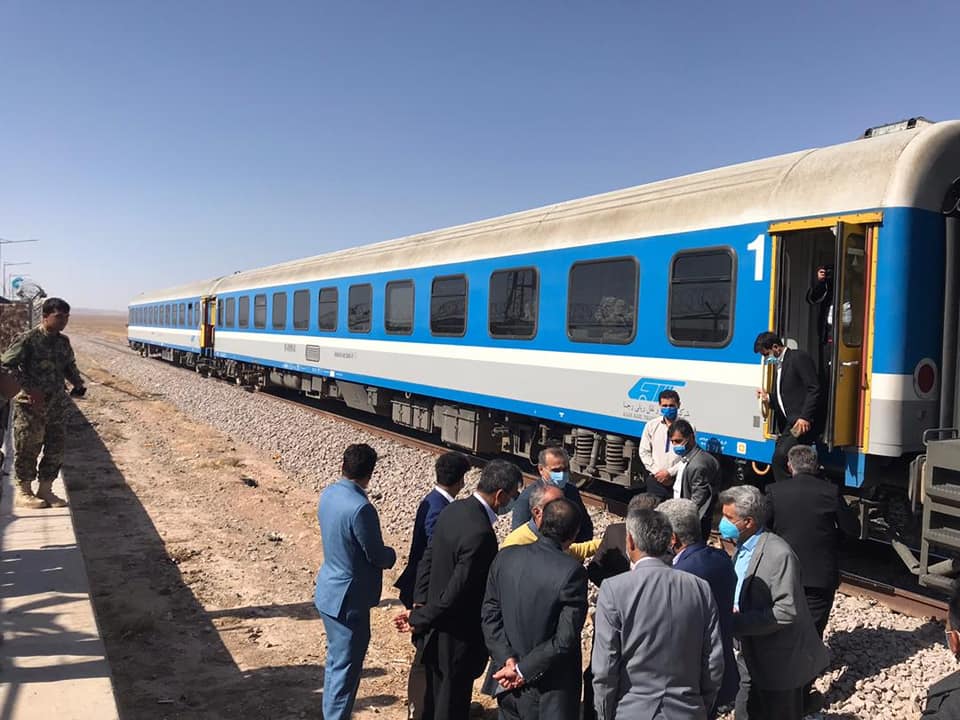
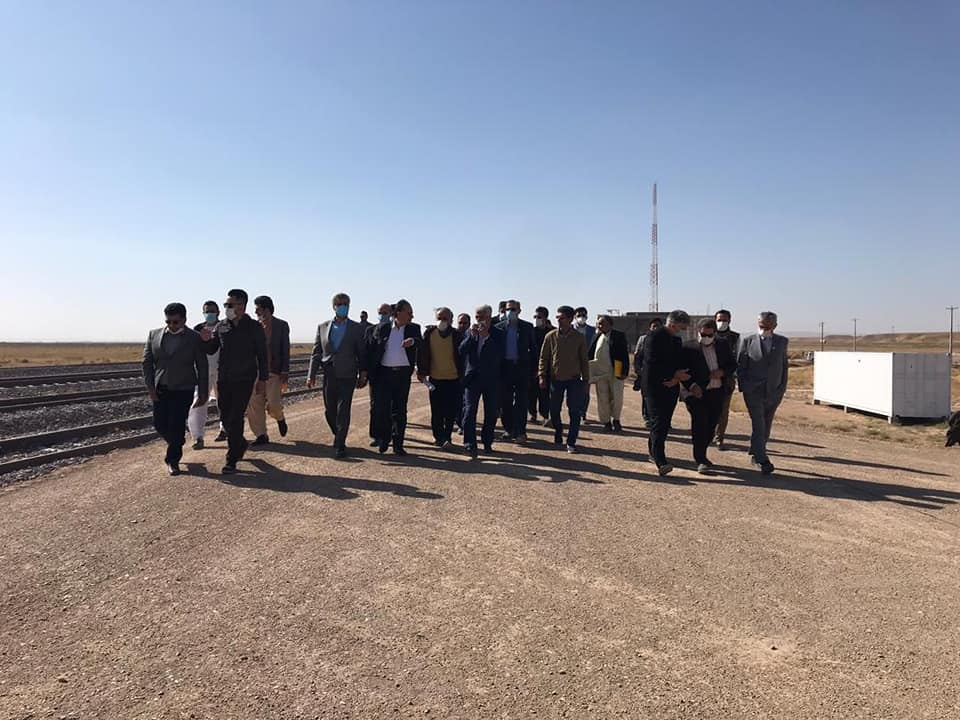
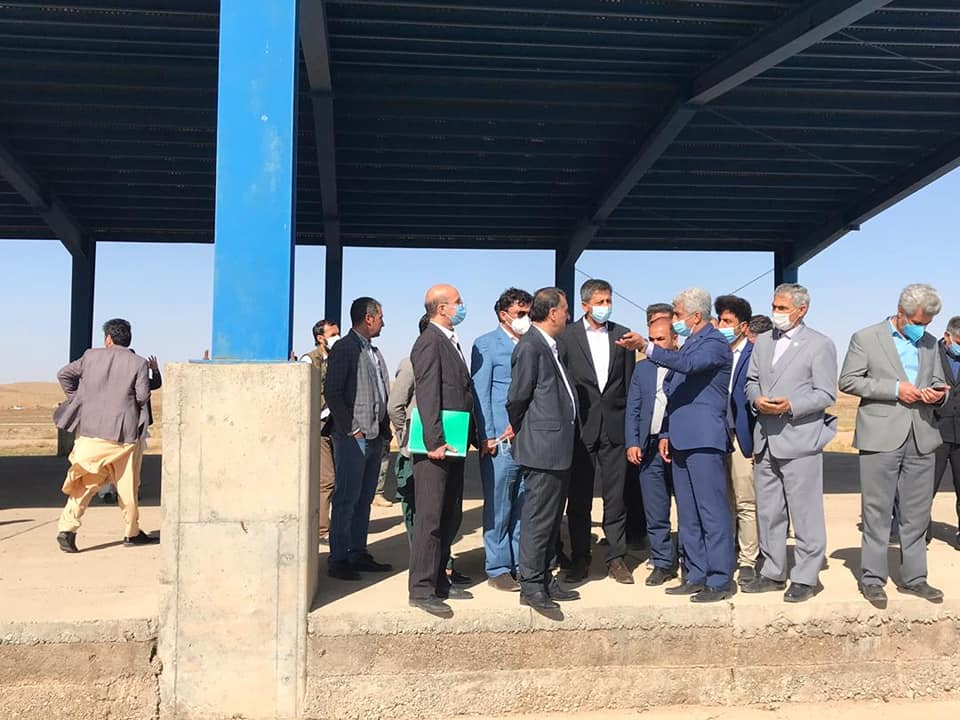
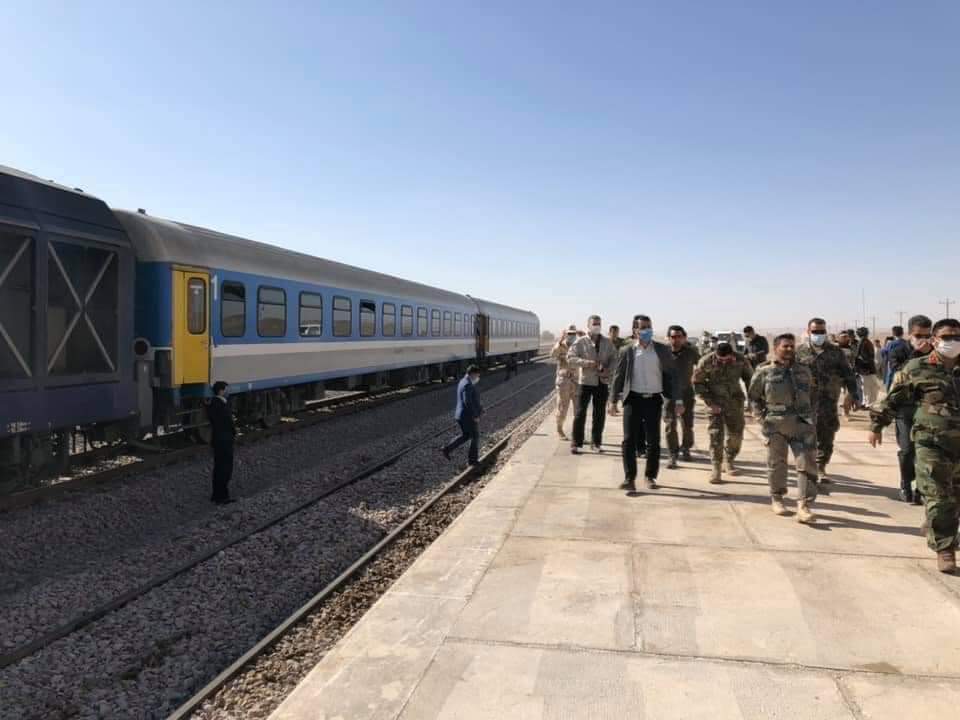
A photo from the Ministry of Public Works website showing an official visit to the Hayratan to Mazar-i-Sharif railway project, dated 1 August 2010, plus a view of some track dated 30 September 2010.


“The visit of minister of public works to the project of railways Heyratan-Mazar sharif”

View from the museum

Sunday, July 24th, 2011

War & Remembrance
The view from the Archaeology Museum. In the foreground are early trains, a form of transportation first brought to Afghanistan by the British. Unfortunately there is no train service in Afghanistan today.

Flickr photo taken on 14 January 2009 by Lauras Eye (CC BY-ND 2.0). The locos were supplied from Germany.

Chaman in 1896

Sunday, July 17th, 2011

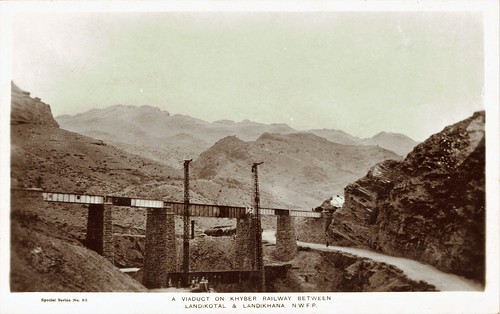
The Royal Geographical Society Picture Library has a photograph showing Railway & telegraph plant for Kandahar / Defence tower & barracks for troops / Railway terminus at Charman, taken by AC Yate in 1896.

The preview is a bit too small to see very much, but it might show the railway stores which were allegedly in place ready for rapid construction of a line across the border from British India to Kandahar in the event that Imperial Russia made a move on Herat.

There is also a view of the Railway station at Chaman: tug of war – Pathan v Punjabi Mohammedan (2nd) Baluchis in Pakistan, also by AC Yate and dated 1896-97.

Presumably the photographer is the Captain AC Yate who wrote The Transcaspian Railway and the Power of the Russians to Occupy Herat in 1891, arguing for building a railway to Sistan (the Afghanistan/Iran/Pakistan border area), rather than Kandahar: The press and the public are at this moment advocating the extension of our railways to Kandahar; but that this could be done without precipitating a rupture of our relations with the Amir is doubtful.

The RGS has various other interesting photos – a search for railway brings up shots of colonial (and other) lines, and there are views of the Bolan Pass line.

Iran – Herat line will play important role in economic growth

Thursday, July 7th, 2011

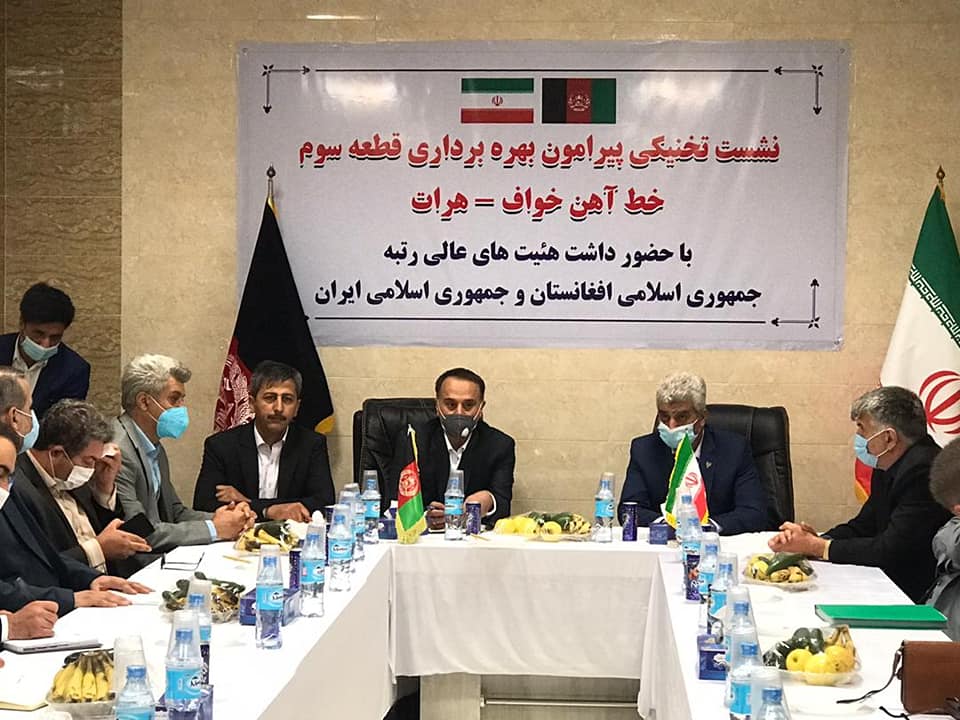
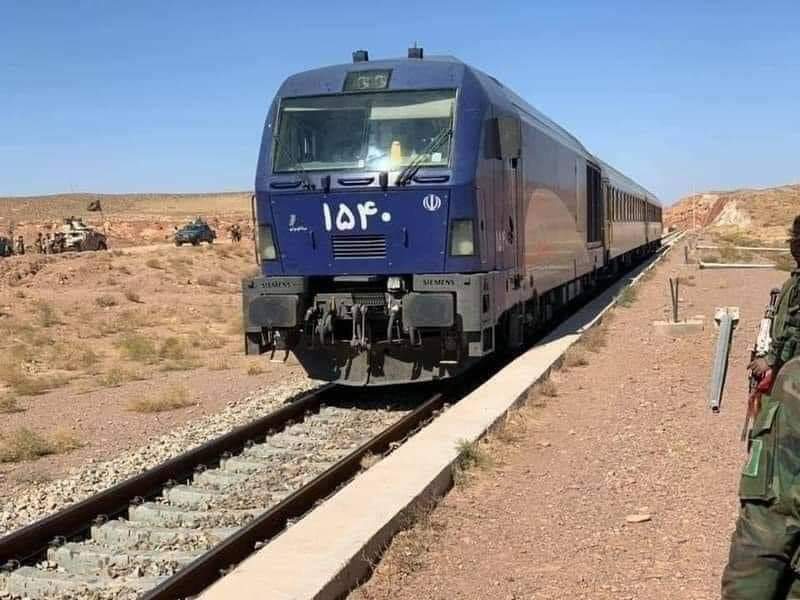
“The great project of Khaf-Herat railway – operation of which has also been commenced – will create a significant development in transit and connecting Afghanistan with regional and extra-regional (Europe) countries. Its connection to the railway of Central Asia, Turkey and Europe via Iran and also its connection to Iran’s nationwide railways network – which will stretch from Bandar Abbas to Afghanistan – can play an important role in economic growth and development of Afghanistan,” the foreign ministry official [Mohsen Pakaein, Chief of Afghanistan Headquarter at the Iranian Foreign Ministry] said.

Source: FM Official Underlines Iran’s Growing Aid to Afghanistan, Fars News Agency, 2011-07-04

Presumably operation means “construction”, rather than train operations.

French model for Afghan rail authority

Wednesday, July 6th, 2011

The French model for development of rail infrastructure in Afghanistan

As part of the French Presidency of the G8, Thierry Mariani, Minister of Transport, former Special Representative of France to Afghanistan and Pakistan, co-chaired with Wahidullah Shahrani, Minister of Mines of Afghanistan and coordinator of Afghan infrastructure, an intergovernmental seminar on regional cooperation in rail around Afghanistan.

Today [4 July 2011] 21 countries represented by their ministers or deputy ministers, 6 international organisations and 14 railway companies participated in the seminar organized by the French Ministry of Foreign Affairs and the Conseil Economique Social et Environnemental.

Wahidullah Shahrani, Minister of Mines of Afghanistan, with the Afghan Minister of Aviation & Transport, and the Afghan Minister of Public Works, announced the creation of the autonomous authority of the Afghan railways, building on the example of SNCF, the French operator.

This authority will act as leader and planner to identify priorities for development of railway infrastructure within the country and also establish railway cooperation with other countries in the area.

“We are honored that Afghanistan has chosen Paris and the Conseil Economique Social et Environnemental to announce the establishment of the railway authority. I will ensure that French experience and know-how are in the service of our Afghan friends and other countries in the region, in order to best help accomplish this great work of opening up of Afghanistan, a prerequisite for development and therefore its stability, “said Thierry Mariani.

Source: Based on Google translation of Le modèle français au service du développement des infrastructures ferroviaires afghanes. Ministère de l’Écologie, du Développement durable, des Transports et du Logement, Paris, France, 2011-07-04

So does this mean the Afghans are now planning their first railway strike…?

Mazar-i-Sharif line opens this month

Sunday, July 3rd, 2011

The new railway from Hayratan to Mazar-i-Sharif will open shortly, reports Central Asia Online.

Although ready to operate, the railway has been idle since February because Afghanistan failed to complete some legal formalities and because some security concerns existed.
[...]
“We helped build the latter line, and it’s up to Afghanistan now to make it operational. Professional railway personnel need to be trained, and locomotives and cars purchased,” [UTY spokesman Rasul Khalikov] said.

The Afghan side plans to start running its own trains by year’s end, he added.
[...]

Source: Uzbek-Afghan railway to start running in July, Maksim Yeniseyev, CentralAsiaOnline.com, 2011-06-29

Rail Projects Underway, But a Uniform Network Remains Elusive

Saturday, July 2nd, 2011

I’ve had a number of e-mails lately about mentions of Afghan railways in Wikileaks, so I probably ought to do something with them.

This message was reported by Aftenposten on 25 January 2011 but dated “1.2.2010″ by the newspaper (1 February 2010, assuming the newspaper is using European date formats). There doesn’t appear to be anything militarily sensitive here, just a bit of interesting stuff about railways, answering some questions. There is confirmation of the Iranian project, pessimism about the copper mine railway plan, and it ends by not sounding very keen on railway development at all.

SECRET SECTION 01 OF 02 KABUL 000388

SIPDIS

E.O. 12958: DECL: 01/26/2035

TAGS: ELTN, EINV, ECON, PGOV, AF, IR

SUBJECT: Rail Projects Underway, But a Uniform Network Remains Elusive
Classified By: Ambassador E. Anthony Wayne for reasons 1.4 b and d.

1. (U) Summary: While two rail construction projects in Afghanistan are underway

Hairatan – Mazar-i-Sharif and Iran – Herat

and several more are under discussion, the dream of a nationwide rail network remains remote. Small-scale projects sponsored by neighboring countries require different rail gauges, matching those of the countries these projects border; while the security situation is delaying two projects and likely deterring proposals for more. The enforcement of a single rail gauge is not practical since it would fail to make connections with at least half of Afghanistan´s neighbors. The Afghan Government must obtain funding f´ and build gauge changing stations if it is serious about connecting Afghanistan´s major population centers and industrial areas by train. End Summary.

Herat and Mazar: The Trains Have Left the Station

- – - – - – - – - – — – - – - – - – - – - – - — – - – -

2. (S) The rail link from Herat to Torbat-E Heydarieh, Iran, funded by the Iranian Government, is more than half complete. The section the Iranians are building and funding in Afghanistan is approximately 60 km from their border eastward toward Herat. The Afghan government under the original bilateral agreement with Iran is obligated to fund construction of the Afghan railroad’s second half, consisting of an additional 60 km of track onward to the western suburbs of Herat city. Iran uses standard gauge (1435 millimeter) track within Iran and is likely to use track to this specification within Afghanistan. (Note: standard gauge is the predominate gauge in the United States.)

It would be strange to use any other gauge for this section of line, as presumably no-one will want to take traffic from Iran or Herat to the frontier point and no further.

3. (SBU) Afghan Government officials toured the Iranian-funded portion of the project January 16 [2010] and were reportedly told by Iranian engineers that the rail bed was essentially completed and the rail laying could be completed in 60 days. They also met Afghan owners of property along the first half of the portion of the railroad to be funded by the Afghan government and informed them they would be compensated for the right of way within 20 to 30 days. The Afghan Ministry of Finance has allotted 97 million Afghanis (a little less than $2 million) for this. Herat Governor Nuristani said the Ministry of Finance has promised approximately $55 million for constructing the last stage of the railway, including compensating landowners for right of way for the second half of Afghan portion. Under the terms of the agreement to build the rail line, Afghanistan promised to fund construction of half of the project within its borders and Iran committed to the other half within Afghanistan, as well as extending its own rail line to the border with Afghanistan.

This ties in with what I have heard elsewhere, but puts some numbers on it.

4. (S) Extending from the Afghan/Uzbek border at Hairaton to Mazar-i-Sharif, an Asian Development Bank (ADB)-funded, Uzbek Railways-constructed track will soon be under construction. The 75 kilometer rail line will cost approximately $170 million. ADB awarded the contract in October 2009. Uzbek Government-owned Uzbek Rail agreed to begin construction in December and finish by the end of 2010. However, security concerns have delayed Uzbek Rail´s construction preparations, such as barracks for workers (all of whom will come from Uzbekistan). Uzbek Rail asked ISAF to provide security forces for the site. ISAF was unable to do so but did agree to share actionable intelligence with Afghan National Security Forces (ANSF) and assured the company that ANSF would provide security. According to a source in Tashkent, Uzbek Rail deemed ANSF protection insufficient and entered contract talks with an American private security contractor. The source also indicated Uzbek President Islom Karimov had ordered the company to start work immediately in early January.

I wonder why ISAF was unable to be involved?

5. (U) The railroad will be 1520 millimeter gauge, the standard across the former Soviet Union. It will connect with existing Uzbek tracks at Termez, Uzbekistan. This rail line is important to coalition forces in Afghanistan, who hope it can speed up the delivery of crucial supplies through the Northern Distribution Network, routing shipments through the former Soviet states to Afghanistan.

This is where it gets interesting:

Pakistani and Chinese Projects Off the Rails

- – - – - – - – - – — – - – - – - – - – - –

6. (C) When China Metalurgical Corporation (MCC) won the tender for Aynak copper mine in 2008, its bid included a promise to build a rail line “associated with the project.” The line would carry copper concentrate and eventually smelted copper to more accessible locations for onward distribution. In January 2010, World-Bank-funded analysts and a private MCC contractor told us the company currently considers the railway not feasible. During a meeting at the mine in September 2009, MCC leadership mentioned what they viewed as “flexible” the requirement to put in the rail, which then-Minister of Mines Adel roundly contradicted, saying the rail was required and “non-negotiable.” A draft of the contract obtained by the Embassy states that “MCC has made a commitment to the Government of Afghanistan to construct, at MCC´s sole expense, a railway associated with the Project…the Parties acknowledge and agree thatthe failure to conclude a railway agreement within this timeframe shall constitute cause for the Parties to revoke this Mining Contract.” In a recent Ambassadorial meeting, Minister of Mines Shahrani said the Aynak contract requires MCC to build “two rail lines” one north and one east, a statement inconsistent with our unofficial copy of the contract. The Embassy and World Bank analysts continue to encourage the Ministry to make the Aynak contract public for transparency reasons. If this occurs, however, the fact that MCC has still not completed an addendum to the contract that would specify when and where rail will be built may provoke controversy.

7. (U) Pakistani media reported January 17 that work on a Quetta-Kandahar rail line would begin soon.

Although it has been going to begin soon for well over 100 years…

The track is complete from Quetta to the Pakistani border at Weesh Chaman, however, the remaining seven kilometers of track to the Afghan border post at Spin Boldak, as well as the remaining 111 kilometers to Kandahar, are “on hold” by the Afghan Ministry of Public Works due to security concerns. Assuming Afghanistan and Pakistan do not build a facility to transfer cargo or change gauges at the border, the rail gauge would be 1,676 millimeters, known as broad gauge, the standard across the Asian sub-continent.

A gauge changer wouldn’t make much sense on a line which only went as far as Spin Boldak.

Hodgepodge Gauges: Problematic but Not the End of the Line

- – - – - – - – - – — – - – - – - – - – - – - – - – - – -

8. (U) With three different rail gauges potentially entering the country, freight will need to be offloaded at break of gauge or facilities must be built to lift cars from the tracks and change their bogies (the chassis of a railway car.)

As a very minor point of note, the message says “bogies”, rather than the more usual US-English term “trucks”.

Changing the bogies on a 50-car train should take approximately five hours and could coincide with customs processing. However, it will significantly delay future passenger and freight trains if the independent lines ever connect. Dependent on donor funding for its rail development, Afghanistan is presently not in a position to enforce a single national rail gauge and must plan to mitigate the economic impact of multiple gauges. The ADB and other independent studies have recommended that Afghanistan adopt the Russian 1520 millimeter gauge within Afghanistan and install gauge change stations at Herat and Kandahar City. (Note: Dual- or variable-gauge tracks avert the need for specialized facilities but cost significantly more to build. To Post´s knowledge, no donor has expressed interest in funding this additional cost. End note.)

Presumably this is saying 1520 gauge from Hairatan – Mazar-i-Sharif – Herat (interchange with 1435 line to Iran) – Kandahar (interchange with 1676 line to Pakistan). That leaves open the question of the Chinese copper line, were it to be deemed feasible.

9. (U) Rail traffic volumes are also an issue. The general rule of thumb is that a rail line is not economically viable with less than 5 million tons of throughput. Anything less than this is more efficiently handled by trucks.

Anyone got any thoughts on those figures?

The anticipated volumes from and through Afghanistan to Iran fall far short of this.

10. (U) Comment: Many countries, including Australia, Tanzania and Angola, operate railroads of different gauges.

As I understand it Angloa is all 1067 mm (Cape gauge) now. The railways are all independent lines running inland from ports, with little prospect of lines being built parallel to the coast to link them up.

These gauge differences become significant, however, as the number of gauges proliferate within country. On the other hand, even the most far-sighted donor would hesitate to build a link to Afghanistan requiring cargo to be offloaded at its border or the construction of an expensive break of gauge facility. It is clearly in the interests of Afghanistan´s neighbors to seek matching rail gauges within Afghanistan, and, unfortunately, Afghanistan is not in a position to adopt a single common rail gauge that would isolate it from at least half of its neighbors. We are encouraging the Afghan Government to plan wisely when evaluating future rail projects and consider the impact of volume and gauge changes on rail efficiency and economy.
End comment.

11. Embassy Tashkent has cleared this cable.

EIKENBERRY

Code for “we don’t think railways are a good idea”?

There are also cables regarding 05.10.2009: Security and Social Issues at Aynak Copper Mine:

Reportedly, MCC has also signed a memorandum of agreement committing to lay a rail line running north and south, connecting Aynak with the proposed Hajigak iron mine and its associated coking coal mine in Bamyan province.

4. (SBU) During a September 17 [2009] meeting with Mining Minister Adel, Aynak Police Commander Mohammad Mosen, and U.S. military and civilian representatives, MCC-Aynak President Zou suggested that MCC may not build a rail line for Aynak. Minister Adel insisted that MCC has a contractual commitment to install the line, but admitted in a later aside that the rail contract had not yet been signed.

And 10.12.2009: Chinese Firm Re-Thinks Afghan Mining Contract After Difficulties Of The Aynak Copper Mine Project:

[China Metallurgical Group Corporation President Shen Heting told a visiting U.S. delegation] existing roads would be sufficient to transport the copper from the mine and that construction of a railway from the mine to the Pakistan port of Gwadar was not economically justified. However, he reiterated that the Chinese government was urging the company to honor its commitments, suggesting that MCC might eventually build some railway.