New book on Financing India’s Imperial Railways

A book to be published in September 2011 looks potentially very interesting: Financing India’s Imperial Railways, 1875–1914, by Stuart Sweeney.

The Indian railway network began as a liberal experiment to promote trade and commerce, the distribution of food and military mobility. Sweeney’s study focuses on Britain’s largest overseas investment project during the nineteenth century, offering a new perspective on the Anglo-Indian experience.

Chapter 3 is entitled “Military Railways in India, 1875–1914: Russophobia, Technology and the Indian Taxpayer”. The book’s index is available at publisher Pickering & Chatto’s website, and there are a number of mentions of Afghanistan, the Kandahar Railway and related matters.

By the looks of it, this will be a serious academic study. Unfortunately, and probably not unrelated to this, it will also be sixty quid…

(other forthcoming books from the publisher include “The Unpublished Letters of Henry St John, 1st Viscount Bolingbroke”. Will the very existence of such a book trigger some kind of publishing grandfather paradox?)
Turkmenistan-Afghanistan agreement ratified

A resolution “On the ratification of a Friendship and Cooperation Agreement between Turkmenistan and the Islamic Republic of Afghanistan” was unanimously adopted at a regular meeting of the Turkmen Parliament during the fourth assembly, an official Turkmen source said.

[…]

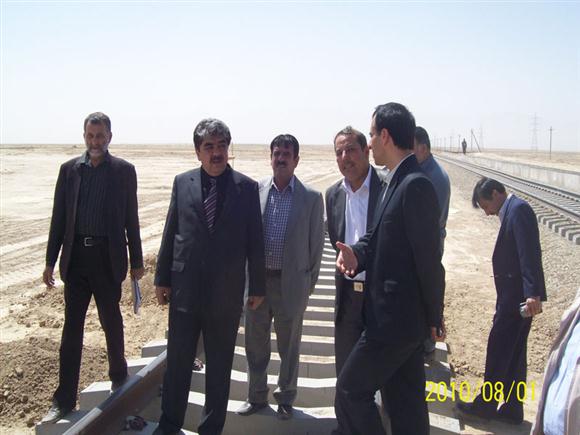
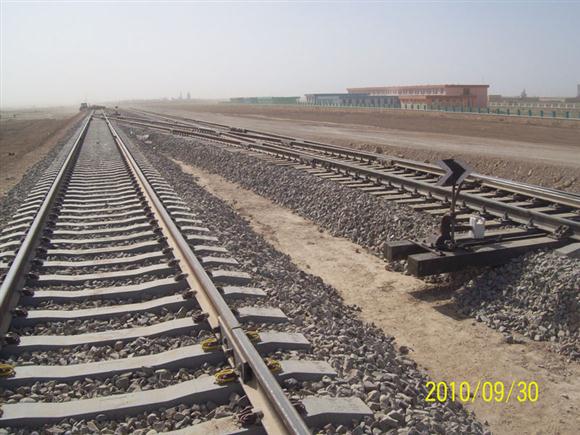
Also, Ashgabat’s initiative to construct a new railway line Atamurat-Ymamnazar (Turkmenistan)-Akina-Andkhoy (Islamic Republic of Afghanistan) is an example of two neighboring countries eventually becoming an important link in the Eurasian continent’s international transit system.

Source: Turkmenistan ratifies Friendship and Cooperation Agreement with Afghanistan, Trend News agency, Ashgabat, Turkmenistan, 2011-08-05

Railway opening delayed

Opening of the Hayratan to Mazar-i-Sharif line had been planned for July, but has been delayed “indefinitely”, Central Asia Online reported on 28 July 2011.

The delay is blamed on “legal and technical issues” including “the incompatibility of the railway’s track width with that of Afghan railways” – which seems a little odd – and the lack of Afghan locomotives, rolling stock and trained workers. There have also been problems with unstable ground.

More at “Afghan railway launch delayed” by Maksim Yeniseyev at Central Asia Online.

Paris conference discusses Afghan railways

A Ministry of Mines statement on the 4 July 2011 conference in Paris.

Conference on Afghan Railways development held in Paris

A comprehensive plan for building railways in Afghanistan based on economic criteria was welcomed at a special conference in Paris.

The Conference, organized by the Afghan and French governments, was attended by representative of the G8 group, international organizations such as the Asian Development Bank, World Bank, European Union, Pakistan, Uzbekistan, Tajikistan, Kazakhstan, India.

The inaugural speech of French Minister of Transport Thierry Mariani, was followed by His Excellency Wahidullah Shahrani, the Afghan Minister of Mines, who presented the plan, designed to facilitate transport of goods between South Asia and Central Asia and revive the historic role of Afghanistan as the transport hub of the region.

Mr. Shahrani clarified National and Regional Resource Corridors Program drafted by the Ministries of Mines, Transport and Civil Aviation, and Public Works. The Program was warmly received by the French Minister of Transport and the participants.

Representative of G8 and international organizations expressed their willingness to consider giving financial and technical support to the proposals for the Mazar-i-sharif-Andkhoi, Kandahar-Chaman, Kabul-Torkham and Kabul-Mazar-i-sharif railways projects financially and technically, and emphasized the need for a clear organizational structure and railway management regime.

Railways are vital for Afghanistan’s development and the exploitation of Afghan mineral resources. Accordingly the comprehensive railway plan has emerged from coordination by the Ministry of Mines with other relevant organizations.

Mr Shahrani, in his dual role as the Minister of Mines and Head of the Infrastructure Cluster, was accompanied by Engineer Abdul Quddus Hamidi the Minister of Public Works, Dr. Daud Ali Najafi Acting Minister for Transport and Civil Aviation, and Mustafa Mastoor Deputy Minister of Finance.

Source: Ministry of Mines, 2011-07-09

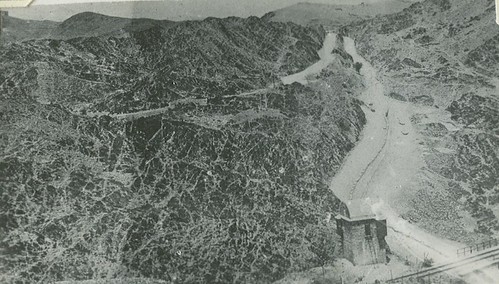
Chaman in 1896

The Royal Geographical Society Picture Library has a photograph showing Railway & telegraph plant for Kandahar / Defence tower & barracks for troops / Railway terminus at Charman, taken by AC Yate in 1896.

The preview is a bit too small to see very much, but it might show the railway stores which were allegedly in place ready for rapid construction of a line across the border from British India to Kandahar in the event that Imperial Russia made a move on Herat.

There is also a view of the Railway station at Chaman: tug of war – Pathan v Punjabi Mohammedan (2nd) Baluchis in Pakistan, also by AC Yate and dated 1896-97.

Presumably the photographer is the Captain AC Yate who wrote The Transcaspian Railway and the Power of the Russians to Occupy Herat in 1891, arguing for building a railway to Sistan (the Afghanistan/Iran/Pakistan border area), rather than Kandahar: The press and the public are at this moment advocating the extension of our railways to Kandahar; but that this could be done without precipitating a rupture of our relations with the Amir is doubtful.

The RGS has various other interesting photos – a search for railway brings up shots of colonial (and other) lines, and there are views of the Bolan Pass line.

Iran – Herat line will play important role in economic growth

“The great project of Khaf-Herat railway – operation of which has also been commenced – will create a significant development in transit and connecting Afghanistan with regional and extra-regional (Europe) countries. Its connection to the railway of Central Asia, Turkey and Europe via Iran and also its connection to Iran’s nationwide railways network – which will stretch from Bandar Abbas to Afghanistan – can play an important role in economic growth and development of Afghanistan,” the foreign ministry official [Mohsen Pakaein, Chief of Afghanistan Headquarter at the Iranian Foreign Ministry] said.

Source: FM Official Underlines Iran’s Growing Aid to Afghanistan, Fars News Agency, 2011-07-04

Presumably operation means “construction”, rather than train operations.

French model for Afghan rail authority

The French model for development of rail infrastructure in Afghanistan

As part of the French Presidency of the G8, Thierry Mariani, Minister of Transport, former Special Representative of France to Afghanistan and Pakistan, co-chaired with Wahidullah Shahrani, Minister of Mines of Afghanistan and coordinator of Afghan infrastructure, an intergovernmental seminar on regional cooperation in rail around Afghanistan.

Today [4 July 2011] 21 countries represented by their ministers or deputy ministers, 6 international organisations and 14 railway companies participated in the seminar organized by the French Ministry of Foreign Affairs and the Conseil Economique Social et Environnemental.

Wahidullah Shahrani, Minister of Mines of Afghanistan, with the Afghan Minister of Aviation & Transport, and the Afghan Minister of Public Works, announced the creation of the autonomous authority of the Afghan railways, building on the example of SNCF, the French operator.

This authority will act as leader and planner to identify priorities for development of railway infrastructure within the country and also establish railway cooperation with other countries in the area.

“We are honored that Afghanistan has chosen Paris and the Conseil Economique Social et Environnemental to announce the establishment of the railway authority. I will ensure that French experience and know-how are in the service of our Afghan friends and other countries in the region, in order to best help accomplish this great work of opening up of Afghanistan, a prerequisite for development and therefore its stability, “said Thierry Mariani.

Source: Based on Google translation of Le modèle français au service du développement des infrastructures ferroviaires afghanes. Ministère de l’Écologie, du Développement durable, des Transports et du Logement, Paris, France, 2011-07-04

So does this mean the Afghans are now planning their first railway strike…?