“according to the note, about 1000 units of railway cargo intended for Tajikistan and Afghanistan have been detained in the territory of Uzbekistan within two months.”
“S. Shoislamov explained that the delay of cargoes is connected with busy cargo transportation traffic to Afghanistan.
Source: gazeta.kz, 2010-03-25
Author: Andrew Grantham
Mazar-i-Sharif line to be extended to Dara-i-Sauf
MAZAR-I-SHARIF: Work on railway line to begin soon: Officials from Uzbekistan and Afghanistan have agreed to launch construction work on a 75-kilometre railway line, linking Mazar-i-Sharif with the Hairatan dry port.
An agreement to the effect was reached at talks between the two sides on January 16.
…
The construction of another railway line — linking the airport in Mazar-i-Sharif to Dara-i-Sauf district of neighbouring Samangan province — would be launched in the second phase, he revealed.[more]
Source: South Asian Outlook quoting Pajhwok Afghan News, 2010-02-??
Copper mine delayed
Production at the Aynak mine in Afghanistan, in which Jiangxi owns a stake, will probably start from 2013 or 2014 instead of 2012, Li also said. Initial geological studies on the project weren’t detailed enough and more work needs to be done, he said.
Source: Bloomberg/Business Week 2010-03-05
Kabul railway coach photo
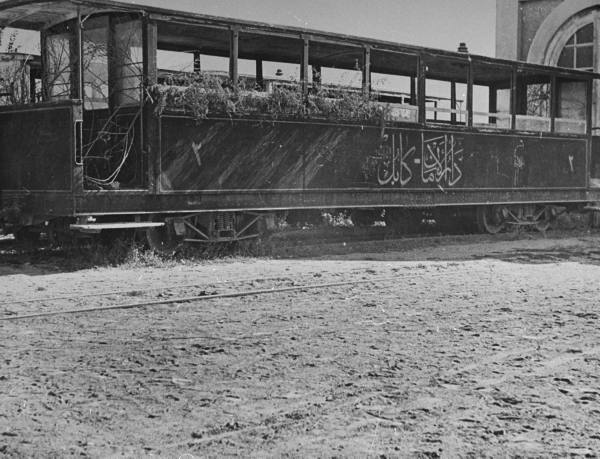
Google’s archive of photos from Life has this one (above) captioned “Deserted Afghan railway car after failure to begin rail system”.
Dated 1938 in the caption, the picture shows an overgrown bogie coach from the short-lived narrow gauge railway which ran for 7 km between Kabul and Darulaman.
The number painted at each end is “2” – a vehicle number, or a class number? The coach is noticeably longer than one in labeled “1” in this picture below, which was taken by Wilhelm Rieck in 1923 and is said to show the first train, so perhaps it is a class number, with the bigger coach being second class.
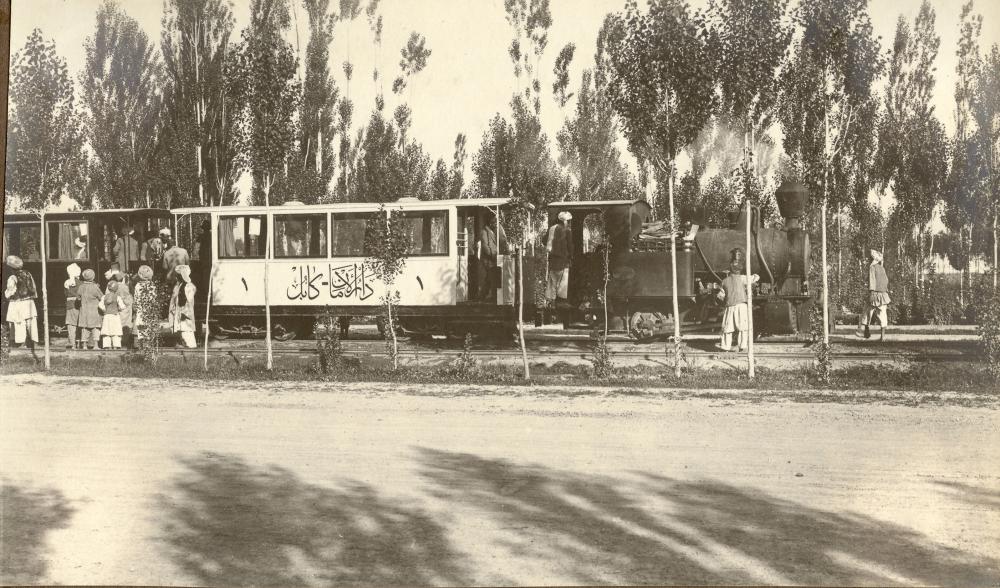
The Life photo shows another coach at the back, apparently a lighter colour, which is presumably the first class car. But is there a third vehicle as well, in front of that one?
This picture below appeared in the February 1930 issue of the German magazine UHU, and shows two coaches plus some wagons.
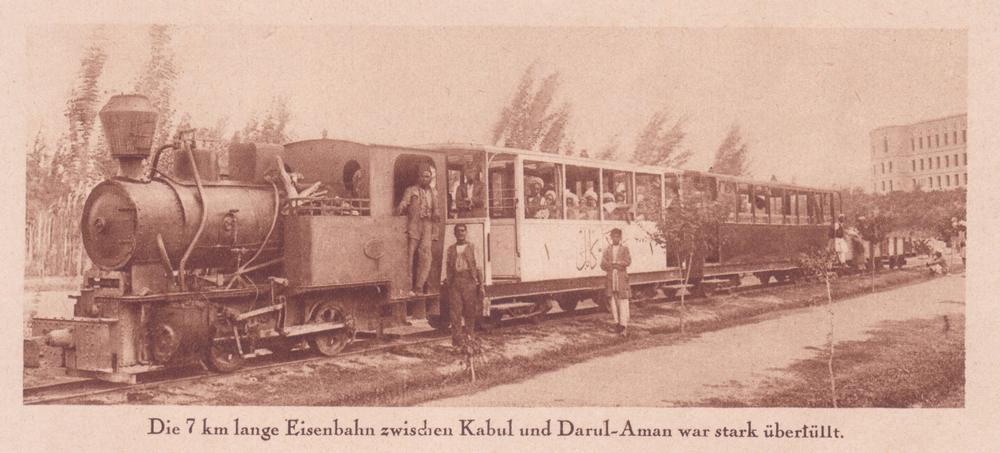
Amazingly, the locomotives have survived, though only the underframes of the coaches remain.
Polish magazine article
The March 2010 issue of Polish magazine Świat Kolei has an article on Afghan railways based on this website, “Kolej-widmo w Afganistanie” by Andrew Grantham and Marek Graff, p28-9.
“The tribes were very restive and hostile”
I’ve just been re-reading a fascinating book I found whilst browsing dusty shelves in a bookshop in Rawalpindi when I was last in Pakistan (1997). It is called “Adventure Through Khyber” by Victor Bayley … His task: to design and supervise the construction of a railway through the Khyber Pass, a railway which would eventually link far off Bombay to the Afghanistan Border at Landi Khana.
Cost of road transport
Writing in Viewpoint: Measuring success in Afghanistan, Fotini Christia, a political scientist at the Massachusetts Institute of Technology who has recently spent time in Afghanistan researching conflict and development says:
The cost of transporting goods is increased by violence and the chances of being attacked on the roads. If transport costs on a route were to fall it would be a positive sign.
In 2007 Afghanistan’s lorry drivers’ union estimated that each vehicle pays more than $6,500 (£4,216) annually in taxes and bribes extorted on Afghanistan’s roads.
Such costs are an important measure of the security situation.
Visit of their Majesties the King and Queen of Afghanistan to Swindon Works
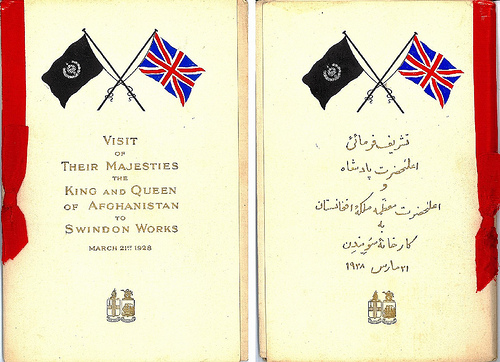
Swindon Local Studies Collection has an image of the commemorative booklet containing an illustrated history of Swindon works in Persian which was produced when King Amanullah visited the Great Western Railway‘s works on 21 March 1928.
The Queen did not attend as had been planned: “it was understood that the Royal lady was too fatigued to bear the journey” reported Railway Gazette on 23 March 1928.
The booklet included portraits of the GWR’s Chairman, Deputy Chairman, General Manager and Chief Mechanical Engineer.
British Pathe has some old film KING AMANULLAH IN SWINDON:
Royalty. Amir of Afghanistan Amanullah Khan visits England. The Amir and his entourage visit a railroad engine factory. Dark but interesting footage. The group watches a worker using a gun to spray paint or some sealant on a railroad freight car; the man wears a mask to protect himself from chemicals. The men walk by a locomotive rotating on a turntable outside factory. Interior: they walk through large space w/ many sets of train wheels lined up. Heavy machinery moving another set of wheels overhead. Next; they gather around a finished locomotive. Exterior again;the group walking along beside train. Entering train coach. This visit is probably from 1921 [sic]; when A.K. signed a treaty w/ Great Britain.
I suspect 1921 should say 1928, making it the same as the visit above and as listed by the British Film Institute.
There is also a photo The King of Afghanistan visits the Swindon railway works, Wiltshire, 1928 at the Science & Society Picture Library.
Mazar-i-Sharif line construction work
Uzbekistan to build railway line in Afghanistan
Uznews.net – A wage of $500 per month, poor living and working conditions and the lack of security – this is what Uzbek railway builders are offered to build the Hairaton-Mazar-e Sharif railway line in northern Afghanistan.
…
The salary of $500 per month is very good in Uzbekistan but many specialists will think twice before putting their lives at risk.
Railway builders told Uznews.net on condition of anonymity that the construction of the Termez-Hairaton line started last autumn and 20 Uzbek builders had been involved in it. “Builders were sent at the beginning of last autumn to lay rails and ballasts. They returned a month ago,” a railway builder said.
A brigade of 30 militarised guards was sent to Afghanistan on 24 January but they could not get there immediately because of military operations in the country’s north.
[more]
Source: Uznews 2010-02-07
Summer Holiday
A 1978 tale of travelling through Afghanistan – and a coup – on a British 1954 Bristol Lodekka bus…!
Phew, that was close.
For bus anoraks, “Grunt” was Bristol Omnibus LD6B registration number YHT940, scrapped 1989/90. Apparently.