Military transport routes to Afghanistan

An interesting 17 February 2009 article from Der Spiegel about the problems of supplying military forces in Afghanistan. This problem is nothing new of course – various armies over the centuries have faced it before.

Allies Struggle to Find Safer Supply Routes

By Dieter Bednarz, Rüdiger Falksohn and Alexander Szandar

The Taliban has staged repeated attacks on Afghanistan’s perilous Khyber Pass against trucks loaded with NATO supplies. The international security forces, including Germany’s Bundeswehr, are scrambling to find safer routes – and might even consider one through Iran.

Interesting bits

  • Three-quarters of all the military equipment and goods for Afghanistan goes through Karachi.
  • Germany is the only NATO country with permission to transport war materiel through Russia by rail. But other countries, including Kazakhstan and Uzbekistan, have refused permits so no trains have actually run.

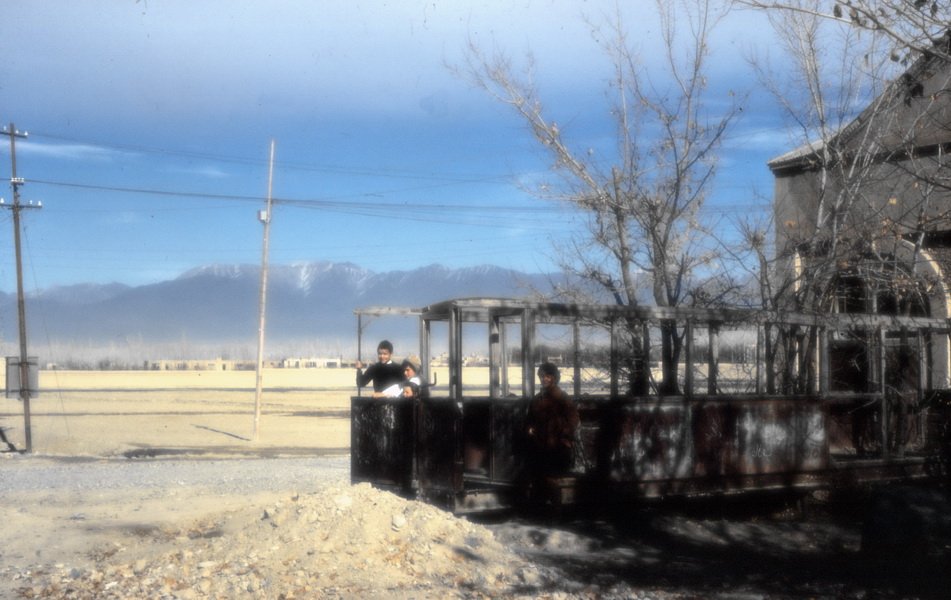
The Bundeswehr has also looked into the feasibility of building additional stretches of track in Afghanistan. There are already 20-year-old plans from the days of the Soviet occupation. The railroad could connect the border town of Hairatan with Mazar-e-Sharif, 67 kilometers away. Thanks to a bridge built in 1982 across the Amu Darya River, which serves as the border between Afghanistan and Uzbekistan, Hairatan has a direct connection to the rail network in Termes.

The financing is still up in the air, though. But given that the project would both make it easier to bring supplies to NATO troops and promote the region’s economy, military officials hope to receive funds from the German Federal Ministry for Economic Cooperation and Development and international organizations. For example, the Asian Development Bank plans to prepare a feasibility study with the support of the Uzbek government.

In December, a privately owned Uzbek railroad company, which already operates in Afghanistan’s Herat Province, contacted the German Embassy in Kabul. According to a confidential report the embassy sent to the German Foreign Ministry in Berlin, the Uzbek company “would like to work with German companies” to implement projects sponsored by the development bank.
Source: Der Spiegel
Studies for two Pakistan Railways extensions

In November 2008 Hail Ghulam Ahmad Bilour, Pakistan’s Railways Minister, told the National Assembly that two studies for railways were being considered.

One plan is to revive the long-standing proposal to extend the Pakistan Railways network by about 10 miles from the current terminus at Chamman to reach Spin Boldak across the border in Afghanistan, providing a railhead for Kandahar.

The other plan is much more substantial, being a 662 km link from Havelian in Pakistan to China via the Khunjerab Pass, which reaches an altitude of 4700 m. However it had been said in September that this route was not commercially feasible.

Pak-China rail link pre-feasibility study completed, National Assembly told


Bilour told the house in response to a question raised by MNAs including Fauzia Wahab, Muhammad Asad Khan, Yasmeen Rehman and Shereen Arshad Khan, that the PC-I for Chaman Spinbuldak (Afghanistan bordering town) rail link was completed with the cost of Rs 417 million in June 2004 and the project was to be executed by M/s Railcop, however, work could not be started due to non-issuance of NOC by Afghanistan government. The revised cost of PC-l is now assessed Rs 943.00 million, he added.

He said that the Pak-China Rail link pre-feasibility study has been completed through two consulting firms M/s L.L.F of German-Austria and M/s Don fang Electric Corporation (DEC) of China and following route has been recommended for detailed feasibility. Havelian-AbbotAbad – Batagram – Thakot-Bridge-Bèsham-Pattan -Dassu-Chillas – Gilgit-Karimabad – Sost-Mintaka Pass. The length of this route is 662 km and tentative cost is US $10.237 billion to be completed in 15 years, he informed.

[More]

Source: Business Recorder, 2008-11-11

There are more details of the feasibility studies in the February 2007 Asia Times Online article China-Pakistan rail link on horizon, by Syed Fazl-e-Haider. This says:

As a part of its development plan for its transport and communications network, Pakistan Railways has completed a feasibility study of the Chaman-Kandahar section for laying railway tracks between Pakistan and Turkmenistan through Afghanistan.
Source: Asia Times Online, 2007-02-24

Iran to Afghanistan railway completed ‘in the next 5 years’

Afghan website Quqnoos reports on the Iran — Herat railway construction project. There is a photograph of some railway track, but it could be a stock picture rather than evidence of the work being underway.

Plans to extend the line from Herat to serve the existing railheads are mentioned.

Afghanistan’s railway project which will connect Shirkhan harbor with the western province of Herat will cost $2 billion.

The project which is planned to be completed in the next five years will connect Central Asia with Iran via Afghanistan.

Construction work on the project, from Herat to Iran, has already started. The design of the rest of the railway network from Herat to the Shirkhan commercial transit way is also in late planning stage.

The railway network which will be about 1200 km long will connect Afghanistan’s Shirkhan, Hairatan, Aqina and Torghondi commercial highways with the commercial harbors in the central Asian countries.

Meanwhile the media in Tajikistan have reported that work has begun on a railway network which will link Klokhabad with Panjpayan, on the border with Afghanistan.

Source: Quqnoos.com 2009-01-19

Iran building rail links to Iraq and Afghanistan

Network expansion is in full swing is an article about the Iranian rail network in the January 2009 issue of Railway Gazette International.

The author is railway consultant David Brice, who has worked on transport projects in Afghanistan, including at the Hayratan terminal.

Work is currently well in hand on extension of RAI’s Torbat – Sangan iron ore line across the border to Herat in Afghanistan (RG 1.08 p55). Whilst perhaps not a major development in terms of generating traffic, this line certainly has major political implications. Largely financed by the Iranian government, it will constitute the first major standard-gauge line in Afghanistan.

A further extension to Sher Khan Bandar serving the northeast of Afghanistan is currently under investigation, and on November 23 2008 the Asian Development Bank announced that a protocol had been signed highlighting the importance of developing rail links from Herat through Mazar-i-Sharif as far as the current Uzbekistan Railways railhead at Hayratan, reached by a 1 520 mm gauge line from Termez. The Afghan government has requested technical and financial assistance from ADB for a pre-feasibility study.

A proposed extension of this route beyond Sher Khan Bandar along the Wakhan Corridor, albeit through challenging terrain, could complete a direct connection from Iran to the rapidly expanding Chinese rail network, creating a standard-gauge through route between Europe and China.
[…]

Iran – Iraq. Two links to Iraq are in hand, one from Khorramshahr to the port of Basra, and the other from Arak via Kermanshah to the Iraqi border at Kosrayi. This will cater for substantial flows of pilgrimage traffic once the political situation has normalised.

Source: Railway Gazette International

Afghan and Turkey – Iran – Pakistan rail links discussed

The 2nd Meeting of Railway Committee of TTCC

(The ECO Secretariat, Tehran, 12 December, 2008)

The 2nd Meeting of Railway Committee of TTCC was held at the ECO Secretariat on 12 December, 2008. Delegations of Afghanistan, Azerbaijan, Iran, Pakistan, Tajikistan, Turkey and Uzbekistan participated in the Meeting. Delegations from the People’s Republic of China and the United Nations Economic Commission for Europe (UNECE) also attended the Meeting.

The Meeting discussed cooperation between the ECO and UNECE on implementation of railway-related articles of Transit Transport Framework Agreement (TTFA) and important UNECE agreements. Those included the European Agreement on Important International Transport Links and Related Installations (AGTC) and the European Agreement on the Main International Railway Links (AGC). Possibilities of participation of the ECO in Phase II of the Euro-Asian Transport Links (EATL) Project were also considered.

The meeting discussed three important projects for improving the regional railway network in the ECO region. These included upgrading the capacity of Sarakhs Station in Iran, improving the Quetta–Taftan Railway in Pakistan and constructing railway bypass around Van Lake in Turkey.

In order to materialize operation of the ECO Container Train on Istanbul-Tehran-Islamabad route, the Meeting requested Iran, Pakistan and Turkey to expedite holding a High Level Expert Group Meeting and a Meeting of the concerned Ministers to decide on technical, operational and other aspects of this important initiative. It was hoped that a demonstration train from Islamabad to Istanbul would be launched in 2009.

The Meeting considered ways to have the Kyrgyz Republic, Tajikistan and Afghanistan connected to the ECO regional railway routes. The said member states would prepare detailed reports on the proposed routes, technical requirement, and expected cargo volumes.

The Meeting worked out the procedures for publishing ECO Railway Transit Routes Maps and the updated Railway Network Map.
Source: Economic Cooperation Organization press release, 2008-12-12

Afghan railways talk at Cambridge


On Friday 13 February 2009 I’m giving a talk to the Cambridge University Railway Club with the title A knife in the vitals: railways and the Great Game.

I’ll be looking at a general history of Afghanistan’s railways, and the various current projects for links to Iran, Pakistan and China.

Apparently it will be in the William Thatcher room at Fitzwilliam College, at 20:30. Non-members are welcome; the CURC attracts some big name speakers (and, erm, me), and you don’t have to be linked to the university to go along.

I guess I’d better start writing my script…

Andrew Grantham MA (Cantab)

Consultants wanted for ABD study of northern Afghan rail plan

Asian Development Bank is seeking consultants to look into the development of a freight and passenger rail network in northern Afghanistan. The route would link the existing line from Uzbekistan with Herat.

The Japan Special Fund is providing USD1.2 million for the eight-month study, with a tentative start date of 1 May 2009.

Afghanistan: Railway Development Program / Package T1: A team of experts is envisaged to be recruited

Closing date: 24-1-2009
Notice number: 42533-01
Abstract:Railway Development Program

The objective of the study is to respond to the Government of Afghanistan’s request to carry out studies of the possible railway linkage in the northern part of the country within approximately 1250 km corridor.
More specifically between the borders with Uzbekistan (at Hairatn) and Tajikstan (at Shirkhan Bendar) connecting with Herat in the West via Kunduz and Mazar e Sharif.

A team of experts is envisaged to be recruited to carry out issues-oriented studies and develop a commercial scenario for effective freight and passenger railway transport and provide the required output in a timely fashion.

The respective consultants will review the available studies undertaken in the respective areas, meet with the stakeholders and business people the requirements and discuss the prospects of the railway system for the transportation of passengers and freight operations in that part of the country.

The consultants will collect necessary data, carry out required field surveys and produce development program and plans.

Source: EVD

Kandahar rail plan revived Victorian idea

Afghanistan Railways: a dream coming true is an October 2004 article by S Azam Ali for the Pakistani newspaper Dawn. Availing of the second Afghan-British War, Russians stitched the great deserts of Central Asia with rail tracks. When the British came to know of the Russian success in the occupation of Marv in 1883, they reviewed and revived the Kandhar State Railway extension from Sibi to Quetta and Chaman.

A dream of the Kandhar Railway in the middle of the 19th century seems to be realized in the 21st century with the change of political scenario from the conflict to cooperation in this most sensitive region. This has become possible with practical move for the regional connectivity project to be undertaken jointly by Afghanistan and Pakistan for railway from Chaman (Pakistan) to Kandhar (Afghanistan) as one of the components of a compact and comprehensive rail road mega programme for 10-member countries in the ECO region.

Announcing a Rs3 billion package for Balochistan, through which the Pakistan Railways would penetrate into Afghanistan via Chaman-Kandhar rail route, Prime Minister Shaukat Aziz added that paper work on the track had been completed. Work on it would begin soon. It would usher in, a new era for economic cooperation between Pakistan, Afghanistan and eight other ECO-member countries in the field of train traffic for the region sprawling over an area of more than seven million sq kms.
[more]
Source: Dawn