Modelling Iraqi railways

RMweb has some discussion of models which could be used to represent Iraqi Republic Railways locos.

Three or four years ago I went to a model railway show in Sutton, south London, where someone was selling imported Czech resin bodyshells for building models of various Czech(-oslovakian) locomotives. At least one of the bodies on show was suitable for an Iraqi loco – perhaps a T669. Unfortunately I didn’t buy one at the time, and I didn’t take the details of where they were made and who imported them. Does this sound familar to anyone? I could be tempted to acquire one now if anyone knows who the supplier is!

Anyway, an RMweb poster called Fosterboy has identified some possible candidates for conversion into models of IRR locos.


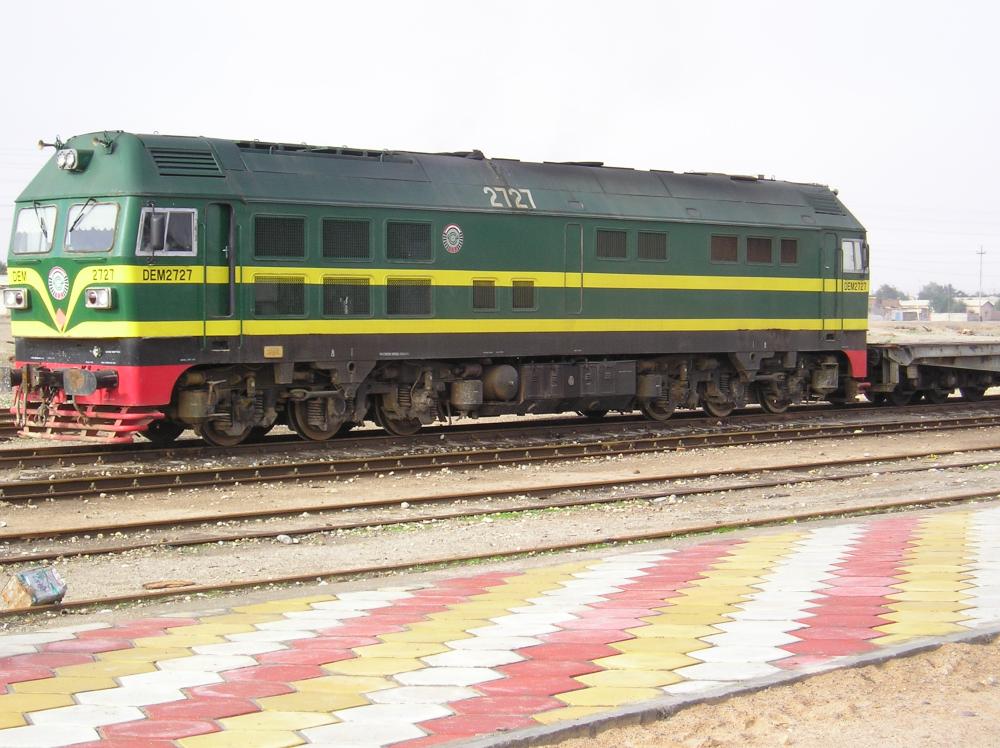
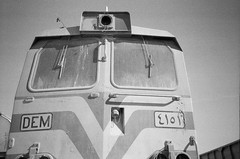
IRR DEM2200 loco.

Piko model of SNCF BB 567590

Piko SNCF BB 567590 model.


IRR DEM2700 loco
Bachmann model CD00301, DF4D Diesel Loco
Bachmann Chinese DF4D model


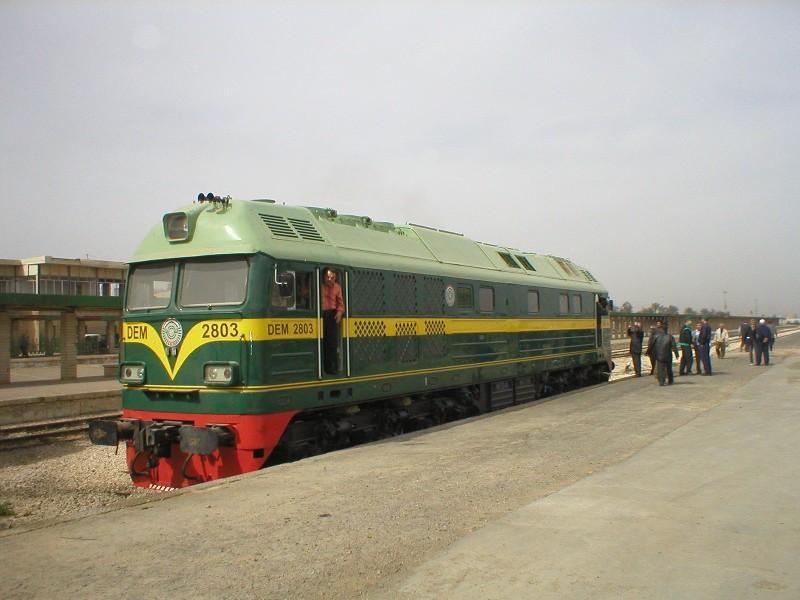
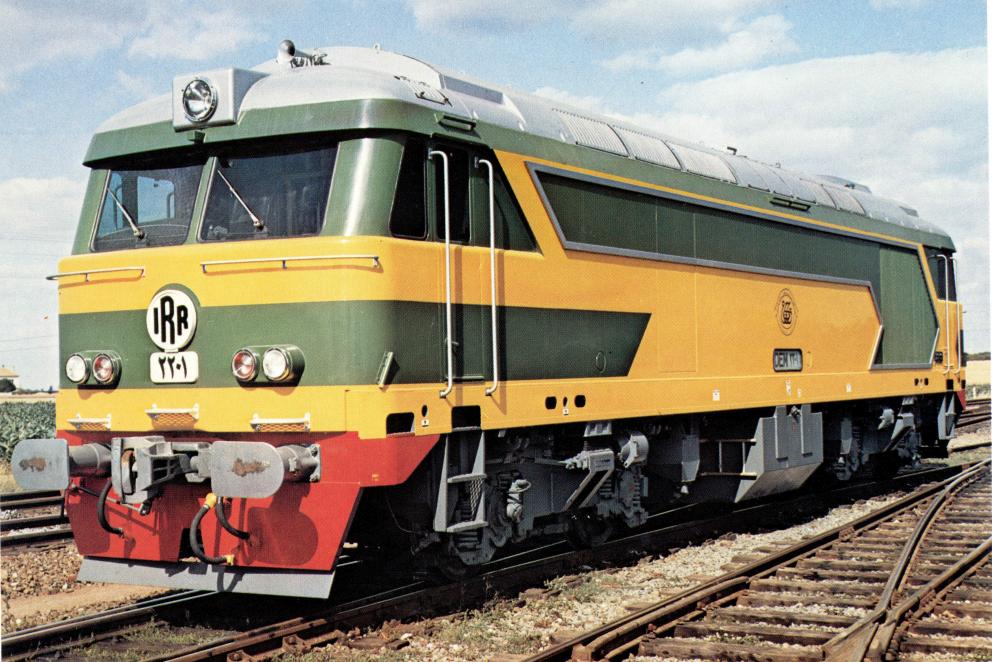
IRR DEM2800 I think you need the cabs of ??? and the body of ???
Unfortunately the links from RMweb to the Roco website have got mangled, and I can’t figure out a way to reverse engineer them, but this class has been described as “the body of a TE109, the front ends of a M62 and the roof fixtures of a 2TE121”, which could help pin down suitable models (why are so many model manufacturers’ websites so appallingly bad?).


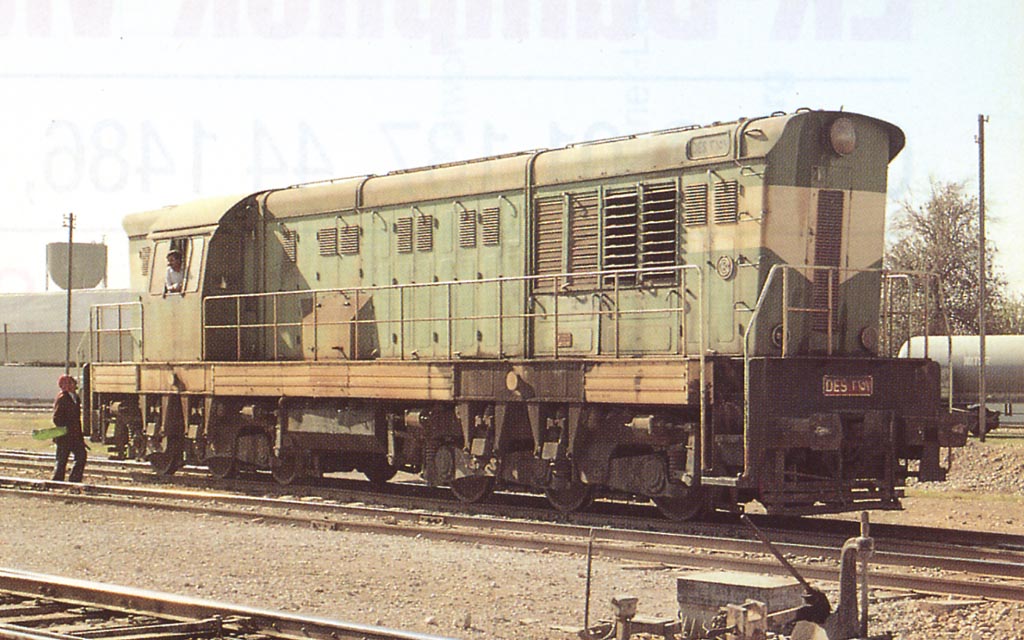
The DES3100 is available as a brass kit
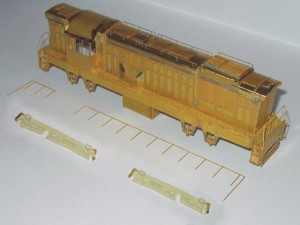
DK-Model brass T669 locomotive kit

More suggestions would be very welcome!

Cleanup gets rails back on track

Another press story from the US military. This one was dated 18 March 2008.

Iraqi Republic Railways at Camp Taji
Workers with the Iraqi republic railways clear debris, March 12, from the tracks on Camp Taji, Iraq. It has been four years since the tracks were last used and as a result they have fallen into disrepair. The yard at Taji is an important part of the railway’s future.

Cleanup Gets Rails Back on Track

By Staff Sgt. Bryant Maude
1st Sustainment Brigade Public Affairs

CAMP TAJI, Iraq – It has been four years since a train powered its way onto Camp Taji, Iraq, and at least that long since any care or attention has been paid to the rail yard. As a result, a crew of ten Iraqi Republic Railway’s workers started the rigorous task of cleaning and repairing the neglected tracks.

Today they are repairing switches, placing derailed train cars back onto the tracks, and clearing debris,” said Staff Sgt. Gilbert Torress, a native of Fresno, Calif., and the sergeant of the guard with Detachment 1, 1st Battalion, 143rd Field Artillery, a California National Guard unit attached to the 1st Sustainment Brigade. After this they will load containers on cars and test the tracks.”

These tracks are currently being renovated as part of an initiative to rebuild the railroad and it’s capabilities to move large volumes of cargo.

The trains pulling in here will carry mostly containers and Iraqi army materials bound for the maintenance facilities under the Taji National Depot,” said Maj. Ira Baldwin, a Laurinburg, N.C., native and mobility chief for the 1st Sustainment Brigade.

Every track cleaned and switch repaired is a step closer to a fully functioning railroad and the eventual creation of good paying jobs for Iraqi people.

Train runs through Taji

A story from US military press services DVIDS, dated 10 March 2008.

Iraqi Republic Railways DEM2716
Waving to spectators and honking the horn of his bright, green and red, locomotive, Mustapha the train conductor is the first Iraqi Republic Railways worker to make the journey along the old tracks between the central Baghdad rail yard in Baghdad and Camp Taji, in many years.

For the First Time in Several Years an Iraqi Republic Railways Locomotive Entered the Rail Gates at Camp Taji

By Staff Sgt. Bryant Maude
1st Sustainment Brigade, Public Affairs Office

CAMP TAJI, Iraq – Waving to spectators and honking the horn of his bright, green and red, locomotive, Mustapha the train conductor, was the first Iraqi Republic Railways worker to make the journey along the old tracks between the central Baghdad rail yard in Baghdad and Camp Taji, in many years.

This historical journey was part of a proof-of-purpose designed to rebuild the tattered railway and stimulate the young economy; it was one small step in that direction for sure.

“An increased use of the rail infrastructure will translate to big dinars for the Iraqi economy,” said Maj. Ira Baldwin, Laurinburg, N.C., native and mobility chief for the 1st Sustainment Brigade.

As far as coalition forces are concerned, the new train will enable large movements of cargo between the port at Um Qasar and Camp Taji, creating greater logistical economies-of-scale.

“Since Taji is the closest secured location nearest Logistics Support Area-Anaconda the trains will allow a faster movement between the two,” stated Baldwin. “This will reduce the costs of moving cargo as compared to over the road, but the greater benefit is that trains will take a great number of Soldiers off the road which translates to lives saved.”

This concern for safety translated to a heavy presence of security forces on Camp Taji. Soldiers from Macedonia were on hand to inspect, Soldiers from Battery A, 2nd Battalion, 11th Field Artillery Regiment opened the rail gates, and Headquarters and Headquarters Battery, Detachment 1, 143rd Field Artillery, 1st Sustainment Brigade, Soldiers provided over watch.

“We are on the lookout for any suspicious activities along the route line,” stated Spc. Justin Cox, a native of Visalia, Calif., and artilleryman with HHB, Det. 1, 143rd FA.

Although there was no call for security intervention, like all things in life, this exercise did not come without challenges.

“There were at least two attempts prior to the successful engine proof of purpose,” said Baldwin. “The conductor’s house was raided and his son was arrested the night prior to the first scheduled POP; then later, there was another train carrying petroleum originating from Bajyi that was high jacked.”

In spite of the challenges, the train movement was a success. Compared to what occurred repeatedly back in 2004 at the height of the insurgency where seemingly every train was a moving target.

“The Multi-National Corps-Iraq future operation cell, the 316th Expeditionary Sustainment Command, the Taji Base Defense Operations Cell, and the Soldiers of the 1st Sustainment Brigade came together and proved that joint efforts do work with close coordination and rehearsals,” stated Baldwin. “I am very proud of what the Iraqi people want to reestablish in regards to improving their lives.”

This increased use of the IRR will equate to increased income generated by local, national, and eventually international trade; overall, the rail industry will provide solid jobs for the Iraqi people as exampled by the conductor Mustapha who has been employed by the IRR for over 27 years.

“I am very lucky to be a part of history in the making by helping to make a train run through,” stated Baldwin.
Kuwait to build rail network?

This week a Kuwaiti official has described plans for a 165 km, four-line metro to be built within six years. Perhaps now Dubai has one almost finished, everyone wants one?

Not only that, but there will be a 505.5 km rail system, eventually linking Saudi Arabia with Iraq, presumably somewhere near Basra. And it might even have links on to Iran, as well.

There have been rumours in the past of proposals for a railway to get supplies from the docks to US bases in Kuwait, taking lots of lorries off the emirate’s roads.

Attacks against IRR trains

A letter by Mark W Hemphill, former US advisor to Iraqi Republic Railways, was published by the Pitsburgh Tribune Review on 17 January 2007 in response to some scaremongering about chemical trains. It gives some background to how things went wrong for IRR after the invasion.

‘Terror’ off the tracks IV

As the U.S. government’s senior railway adviser to the Iraqi Republic Railways (IRR) from February 2005 to August 2006, I am qualified to point out a major error of fact and a greater error of logic Carl Prine made in his “Terror on the Tracks” series.

The factual error is this: After Mr. Prine observed the Iraqi Republic Railway at a standstill in Anbar Province, he concluded terrorists brought it to a standstill. In fact, the IRR was at a standstill in Anbar because the U.S. military decided the railway didn’t need to operate!

It decided the railway was of such secondary importance to Iraq’s economy and the U.S. mission in Iraq that it could seize railway marshalling yards, stations and maintenance shops to convert them to U.S. military bases and tear gaps through the track to make roads for its vehicles. As a result, the economy in Anbar Province, consisting of heavy industry dependent upon railway transportation, had to also shut down — and there went the jobs and family incomes.

How does Mr. Prine know that militants have learned how to slice open tank cars in Iraq? In fact, they haven’t bothered to try.

From late 2003 to the present there have been several hundred attacks on IRR track, trains and employees by bandits. These attacks are variously designed to demonstrate the ineffectiveness of the central government, to encourage the railway to pay “protection” to local criminal gangs and to gin up work for local labor contractors.

As far as an attack on IRR tank cars carrying hazardous commodities designed to cause mass casualties of Iraqi civilians, not one has been attempted. This even though the IRR moves entire trainloads of highly explosive commodities — from predictable origins to predictable destinations on predictable schedules — in tank cars labeled clearly as to their contents.

Meanwhile, Iraqi civilians are being slaughtered by the hundreds with simple homemade bombs delivered in taxis and trucks to markets, bus stations and mosques.

If our experience with terrorists in Iraq predicts our vulnerability in the U.S., it is that the terrorists have decided that railway tank cars carrying hazardous materials are an unattractive target.

Mark W. Hemphill
Washougal, Wash.

Taji train moves wagons to Baghdad

IRR loco

A press release from DVIDs, the US military’s Digital Video & Imagery Distribution System. Obviously this may not by a totally unbiased source of good news, but it’s still interesting.

For some reason they refer to Iraqi National Railways, rather than Iraqi Republic Railways.

Taji Train Moves Cars to Baghdad

By Staff Sgt. Bryant Maude
1st Sustainment Brigade
24 March 2008

CAMP TAJI, Iraq – The day started off with a stuck switch that needed to be repaired before Mustapha, the conductor for the Iraqi National Railways, could move his Chinese built diesel-electric train down the tracks to collect the 54 flat cars destined for Bagdad’s central rail yard, March 20.

IRR train shunting

“We’re removing 54 old, defunct train cars out of the Taji rail yard in an effort to clear up space for future rail moves,” stated Maj. Ira Baldwin, a Laurinburg, N.C., native and mobility chief for the 1st Sustainment Brigade.

The Taji rail spur project started weeks ago with the arrival of the first train since 2004 and continued with a crew of Iraqi National Railway workers cleaning tracks and repairing switches. Eventually this spur will be used by both coalition forces and the Iraqi army as a place to move heavy cargo in and out of the Central Receiving and Shipping Point (CRSP) and the Taji National Depot respectively.

Man looking at train

“This proof of purpose does several things,” states Baldwin. “It serves as a test bed for the U.S. Army to conduct rail operations in Iraq, and builds confidence in the Iraqi National Railway. Eventually, having a viable rail system, the Iraqi army will have a means by which they can transport equipment, provide good jobs for Iraqi workers, and aid in the overall growth of the Iraqi economy.”

This optimistic approach was not just evident in the Soldiers, but the conductor and his crew as well.

Train in Iraq
“Very pleased with the way the railroad has returned,” said Mustapha.

A twenty-seven year veteran of the rail business, Mustapha got his start as a result of watching friends who encouraged him to become a driver. Now he operates a number of aging trains that were purchased years ago from places like Spain, Turkey, China, and Germany.

“I hope to get newer equipment and that the tracks will be improved and the depreciation to the equipment will slow down,” said Mustapha. “God willing it will be in the service of the Iraqi forces and everyone knows how efficient they are at running things.”

Iraqi Republic Railways opts for Pandrol clips

Pandrol is a company which makes those little curly metal things which hold the rails in place:
Pandrol clip fastening machine

The Iraqi Railways are rehabilitating and replacing large areas of their railway network and following successful trials of the Pandrol Fastclip elastic rail fastening, the Railway has adopted Pandrol fastenings as its standard. Pandrol are also supplying machines for the mechanical installation of the rail fastenings. Pandrol hope to develop more business opportunities in Iraq in the future as further track projects are approved.

Pandrol, February 2008