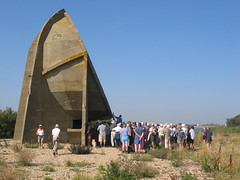
Sound mirrors near Dover (now buried)

October 21st, 2008


Sound mirrors near Dover (now buried)

Originally uploaded by www.doverpast.co.uk

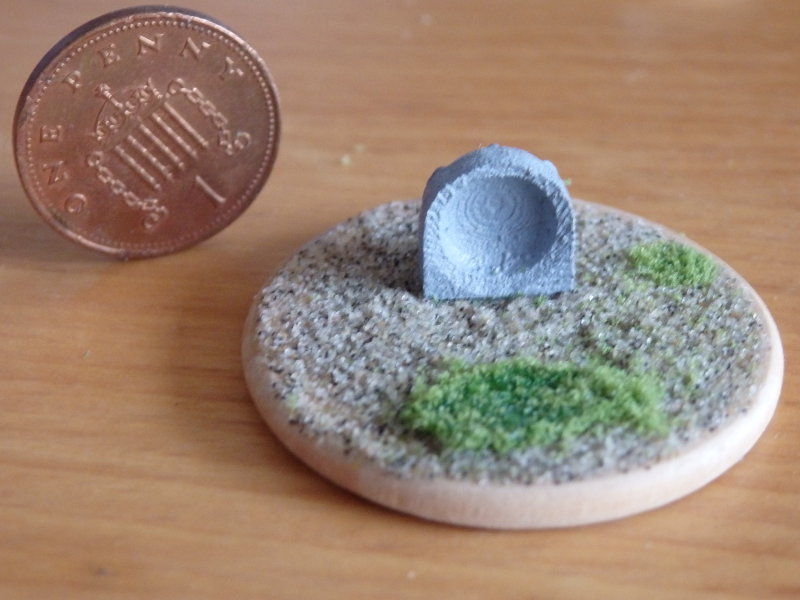
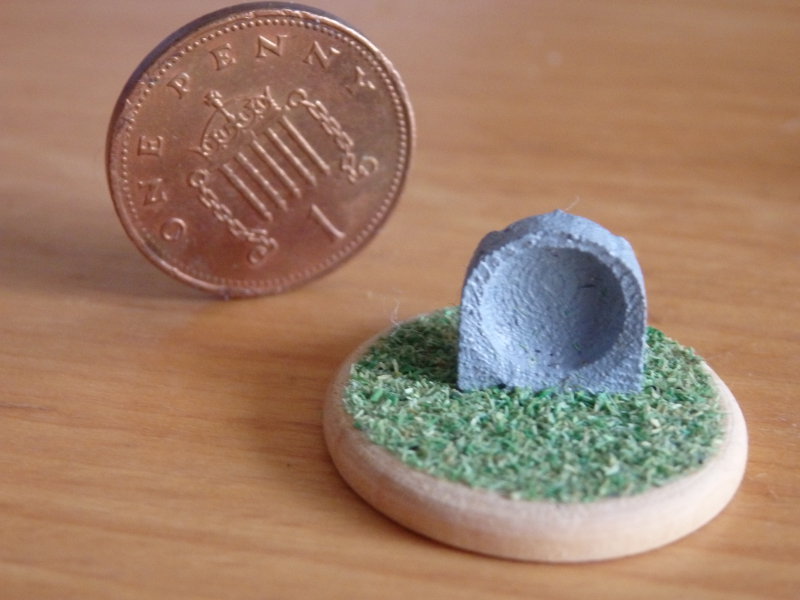
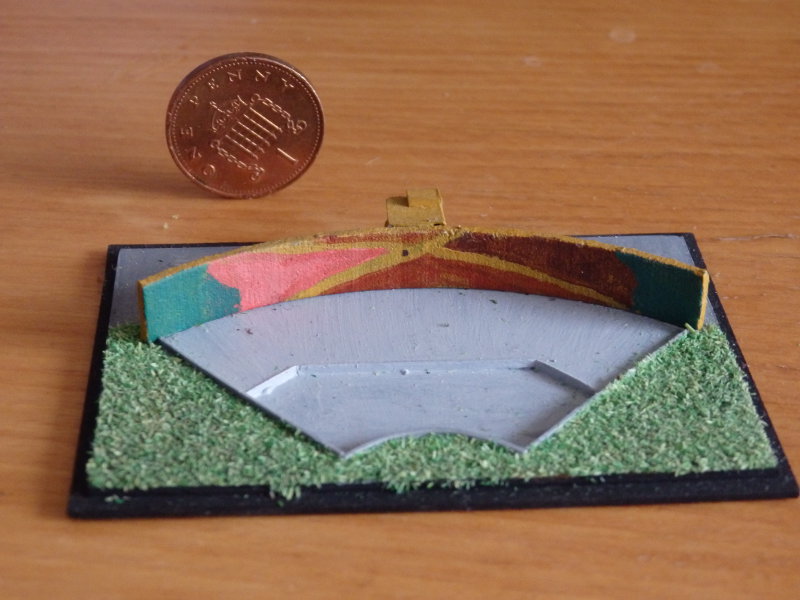
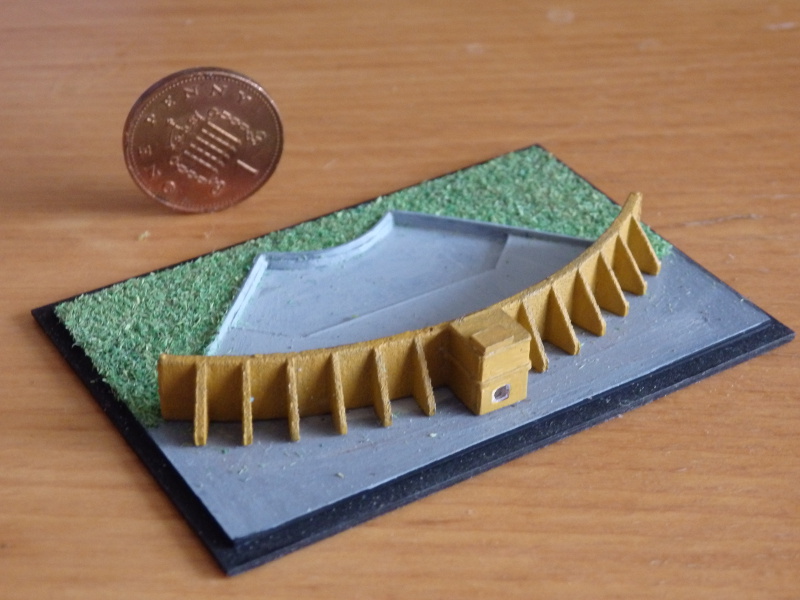
Photo of the Fan Bay sound mirrors, which unfortunately are now buried. I went for a look round the area once, but failed to find evidence of them.

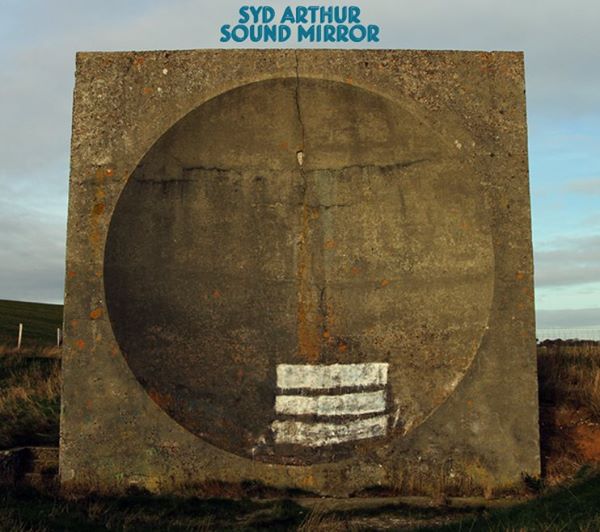
Sound mirror on album cover map

October 17th, 2008

album cover

Word Magazine’s World Album Covers has a Google Earth map showing where iconic album cover photographs were taken, including Ether Song by Turin Brakes at the Denge sound mirrors.

Kilnsea sound mirror on the BBC

October 15th, 2008

A huge concrete dish, pointing at the North Sea from an East Yorkshire field, was once a vital part of Britain’s defence system says a BBC video about the Kilnsea acoustic mirror.

The interview with local historian Jan Crowther is part of the BBC Look North programme’s Abandoned series with Matt Richards.

Matt was recently in touch seeking information for a proposed broadcast about Drewton tunnel on the old Hull & Barnsley Railway.

Maghtab mirror pictures and a model

October 5th, 2008

“Norwichpaul” has posted some photographs of the 200ft long Sound Mirror at Maghtab in Malta on the Airfield Information Exchange forum.

Steven Vella of St Nicholas College in Malta has built a model of it.

A while ago I built a 4 mm/ft scale model of the somewhat smaller Tags:
Posted in History, Sound mirrors | No Comments »

History of the Future of War Noises

September 24th, 2008

The Sound Mirrors: A History of the Future of War Noises is a July 2008 article by Ithamar Silver from Le Panoptique.

Although “not part of architectural history proper,” a series of moss and graffiti covered ruins along England’s southeastern coast belies one of the more grandly misguided displays of national insecurity to be produced by the tumult of the twentieth century. The remains are as imposing and impenetrable as any fortress—yet these were not traditional fortifications meant to withstand an enemy onslaught, a fact that renders their solidity largely palliative.

They were, essentially, ears.

(where it says one in Boulby that had somehow been transformed into a private residence, it should presumably read “Selsey”)

Abbot's Cliff sound mirror
Meanwhile, Peter Frost has sent this photo of the Abbot’s Cliff sound mirror, which he came across whilst walking towards Dover from Capel-le-Ferne in Kent.

A sound mirror in Gibraltar?

September 16th, 2008

Paul Wells of doverpast.co.uk has found something in Gibraltar which looks rather like a sound mirror. But is it, or is it something else?

Last Denge sound mirror guided walk of 2008

September 12th, 2008

Sunday 14 September is the final chance in 2008 to visit the Sounds Mirrors at Lade Pit, near Dungeness.

The walk will be led by Dr Scarth, the world’s expert on sound mirrors and author of the book Echoes from the Sky, who will tell the fascinating story behind them.

The meeting point is at 2pm in Lade car park opposite Taylor Road on Coast Drive, approximately half way between the Pilot Pub and Romney Sands (grid reference TR 085 208).

There is no charge, but donations are appreciated. No booking is required.

See the Romney Marsh Countryside Project website for details.

Il Widna - the Maltese sound mirror

September 7th, 2008

il widna
The only sound mirror to be built outside England is a 200 foot example in Malta. When I visited the country earlier this year, I couldn’t miss out on the chance to go to see it.

Here are some photos and some background details of its history, and also details of how to find it.

Sound Mirror, Fullwell, Sunderland

August 17th, 2008

A recent photo of the sunderland mirror, by Phil Thirkell.

Microphone array for wind tunnel testing

August 10th, 2008

There is a reference to sound mirrors (and this website!) in the University of Florida’s Journal of Undergraduate Research, Volume 9, Issue 2. November/December 2007.

Nikolas Zawodny’s paper on the Design and Fabrication of a Phased Acoustic Array to Analyze Noise Generation of Aircraft Components does what it says on the tin, though there appears to be lots of hard sums involved.

Early techniques of airframe noise analysis involved the concept of an “acoustic mirror,” which consisted of a single microphone positioned in the acoustic far field of a large concave elliptical mirror. The origin of acoustic mirrors can be traced back to the north and southeast coasts of England in the early 1920s, where they were used to provide early warning of incoming enemy aircraft planning to attack coastal towns. These coastal “listening ears” were eventually rendered obsolete with the development of faster aircraft and the invention of radar.

The date is actually slightly out, as some mirrors were built during World War I.